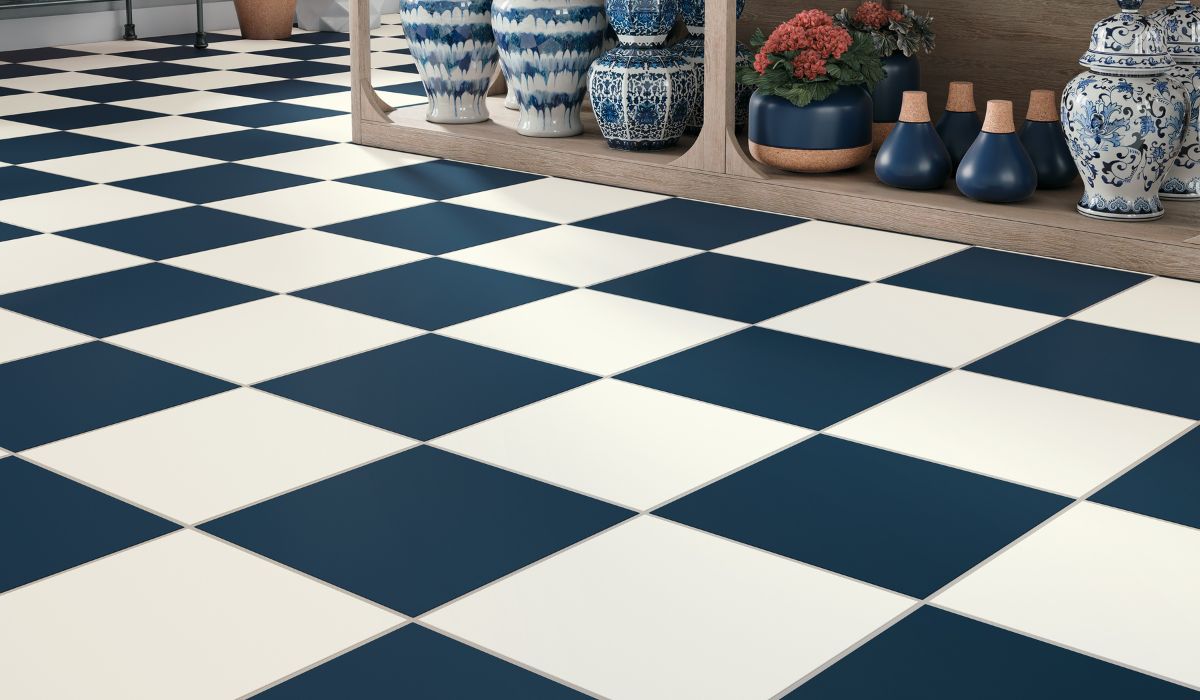
Why Through-Body Porcelain Tile Was the Original Standard
Back when porcelain tile production was much more limited, most tile was produced as through-body tile. By definition, through-body porcelain tile is unglazed. There is no separate decorative surface, printed visual, or applied glaze. Through-body tile is a solid, monolithic material with color running through the full body of the tile.
That construction gave through-body tile its reputation. If the tile was cut, worn, or chipped, the exposed material remained visually consistent because there was not a different surface layer sitting on top of a contrasting body. The tradeoff was visual range. Through-body tile performs beautifully, but it does not create the same kind of graphic depth, movement, or realism that modern surface decoration can achieve.
How Porcelain Tile Manufacturing Changed
As tile technology advanced, manufacturers gained the ability to create far more sophisticated visuals on porcelain tile. Wood looks, concrete looks, terrazzo effects, stone graphics, subtle textures, and layered surface details all became possible because the visual is applied to the tile surface.
Tile could now offer the performance benefits of porcelain while also providing the design range architects and interior designers wanted. Instead of relying solely on a solid-color tile body, manufacturers could create a decorated surface and coordinate the body color with it. That is where color-body porcelain tile comes in.
What Color-Body Porcelain Tile Means
Color-body porcelain tile is a glazed tile with a decorated surface and a body color that coordinates with the surface visual. The color does not create the full visual all the way through the tile, the way through-body construction does. Instead, the tile body is made in a similar or complementary color.
This construction matters because it reduces contrast if an edge is exposed or if minor damage occurs. A color-body tile with a concrete look, for example, may have a gray-toned body beneath the decorated surface. A terrazzo-look tile may use a coordinating base color in the tile body, while the terrazzo chips and details are applied to the surface.
Color-body porcelain tile is widely used because it gives specifiers the visuals they want, balancing design flexibility with practical performance.
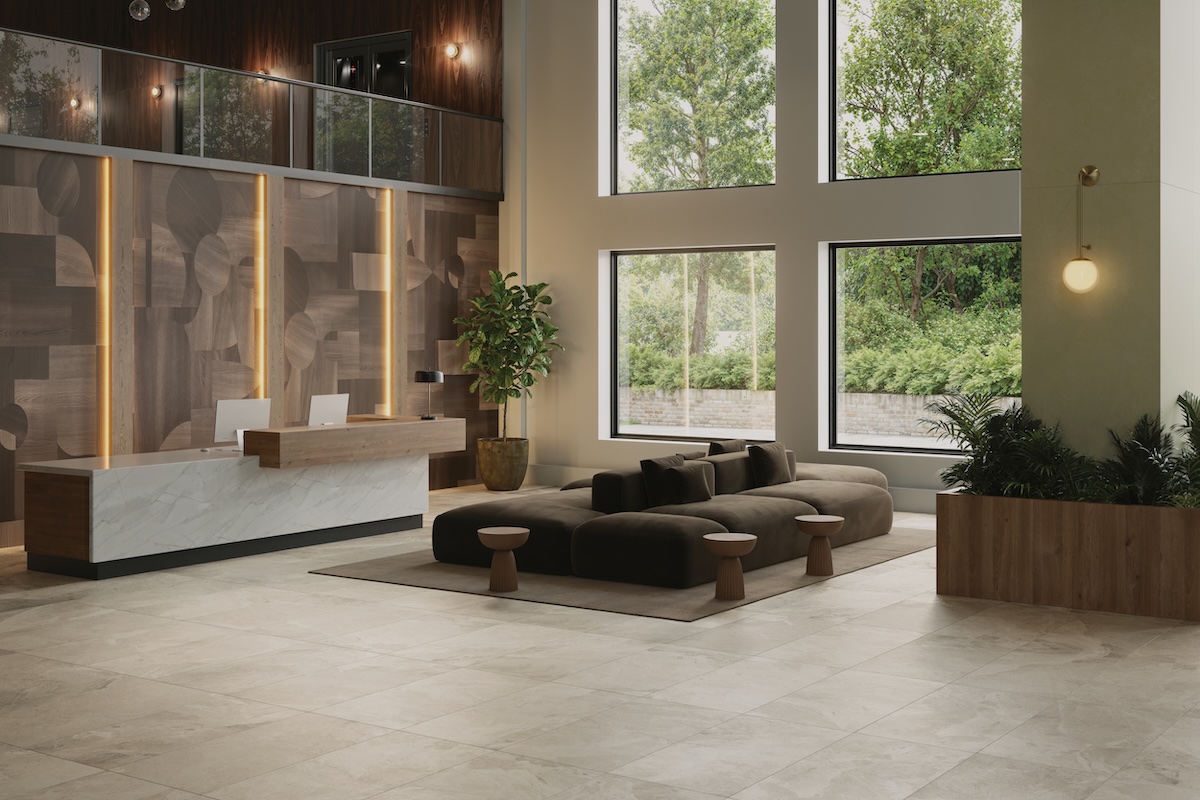
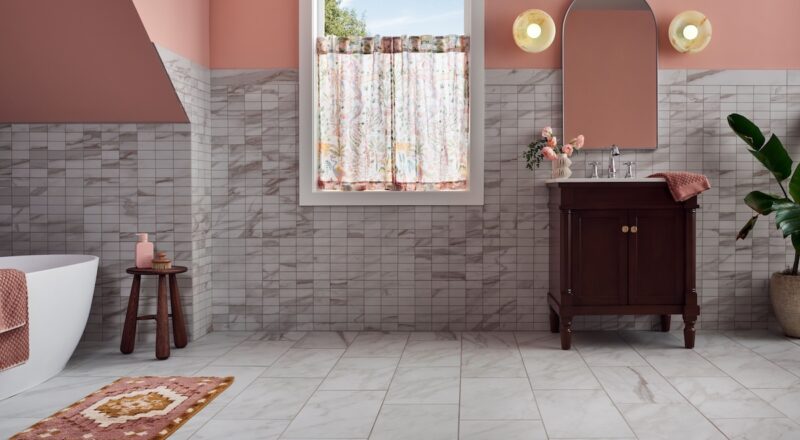
Like most of porcelain tile collections today, carbon-neutral Cleve™ is color-body .
How Glazed Porcelain Tile Fits In
Glazed porcelain tile simply means the tile has a surface layer that creates the visual. That surface may be subtle and simple, or it may be highly detailed.
Some glazed porcelain tile is color-body, meaning the body color coordinates with the surface. Other glazed tile may have a body color that does not closely match the surface. Both can perform well, but the visual effect of a chip, cut, or exposed edge may be different.
A Quick Comparison
- Through-body: Unglazed, color through entire tile
- Color-body: Glazed surface, coordinating body color
- Glazed: Decorated surface, body may or may not coordinate
Is Through-Body Porcelain Tile Stronger or Better?
Through-body porcelain tile is sometimes assumed to be stronger than or superior to glazed porcelain tile, but that is not how breaking strength works. Strength is determined by the tile’s formulation, pressing, firing, thickness, and overall manufacturing quality, not simply by whether the color runs through the body.
Modern glazed porcelain tile, including color-body tile, can meet demanding performance standards. In many commercial applications, the amount of force required to actually break a glazed porcelain tile is far beyond normal daily use.
Because the through-body tile is unglazed, its surface texture comes from the fired porcelain body itself, which can provide natural enhanced traction. But unglazed does not automatically mean better underfoot performance. Manufacturers now produce high-tech matte-glazed porcelain tiles specifically engineered for enhanced traction, and these surfaces can match or even exceed the traction of some unglazed through-body tiles.
The difference between through-body and glazed tile is not about one being structurally superior to the other. The difference can come into play if an edge is exposed or the tile is damaged. In those cases, a standard glazed tile may reveal a different body color beneath the surface, while color-body and through-body constructions are designed to reduce that contrast.
But even in extreme environments, porcelain tiles tend not to show wear, and chipping is not the everyday concern people sometimes imagine. Crossville® porcelain tile is extremely dense, highly durable, and designed to withstand demanding environments. The body-color conversation is really about how different types of tile are made, not a reason to worry that the surface is fragile.
For most specifications, the decision is not about better or worse. It comes down to the look you want, how the space will be used, and the type of tile construction that best supports both.
Why Through-Body Tile Still Matters
Through-body porcelain tile still has an important place, especially in installations where exposed edges are part of the design. Since the body matches the surface, it works well in applications where the tile edge may be visible, such as stairs, countertops, or pool coping, without always requiring a separate trim piece.
At the same time, through-body tile is no longer the only serious performance option. Color-body and glazed porcelain tile have expanded what porcelain can do visually while still delivering the durability expected from the category. That evolution is why the market has shifted so strongly toward decorated surfaces and color-coordinated bodies.
Where Through-Body Still Works Beautifully
While many porcelain tile collections now use decorated surfaces and color-body construction, through-body porcelain still has a place in commercial design. Crossville offers two through-body porcelain tile collections: Cross-Colors Mingles™ and Retro Active 2.0™.
Cross-Colors Mingles Through-body Porcelain Tile
Cross-Colors Mingles is a long-standing workhorse collection, especially for demanding commercial environments. It is often used with Crossville’s Cross-Tread® system, which provides enhanced traction for back-of-house areas, service corridors, kitchens, and other commercial applications where durability and underfoot grip matter. For projects that might traditionally look to quarry tile, Cross-Colors Mingles with Cross-Tread offers a clean, porcelain alternative with the performance benefits specifiers expect from Crossville.
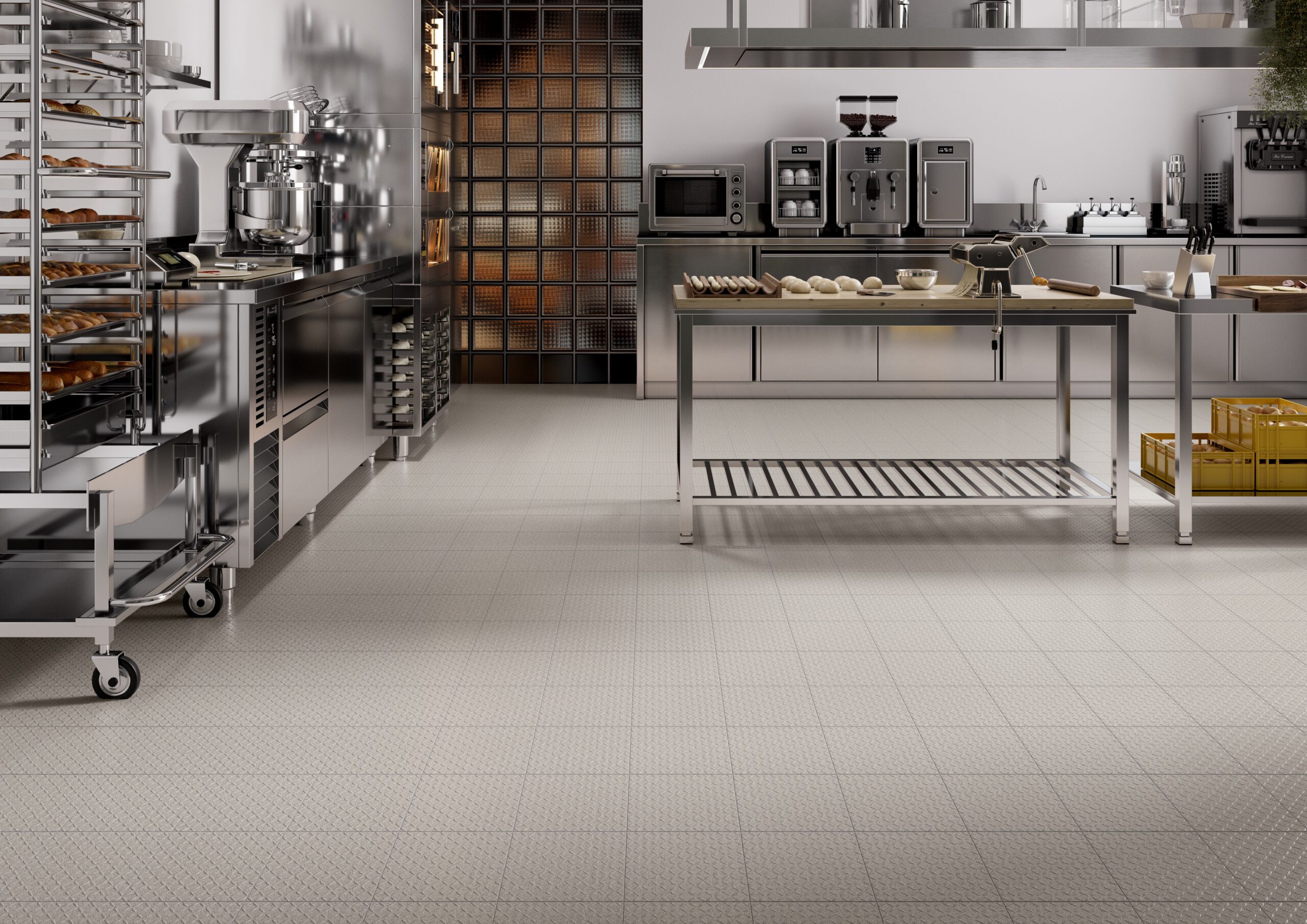 Cross Colors Mingles with Cross-Tread, a through-body quarry tile alternative for back-of-house and more. Learn more about Cross-Tread here and download the brochure here.
Retro Active 2.0 Through-body Porcelain Tile
Retro Active 2.0 brings through-body construction into a more colorful, modern design language. With its energetic palette and versatile format options, the collection shows that through-body porcelain is not limited to purely utilitarian spaces. It can support expressive commercial interiors while still delivering the consistency and durability that made through-body tile valuable in the first place.
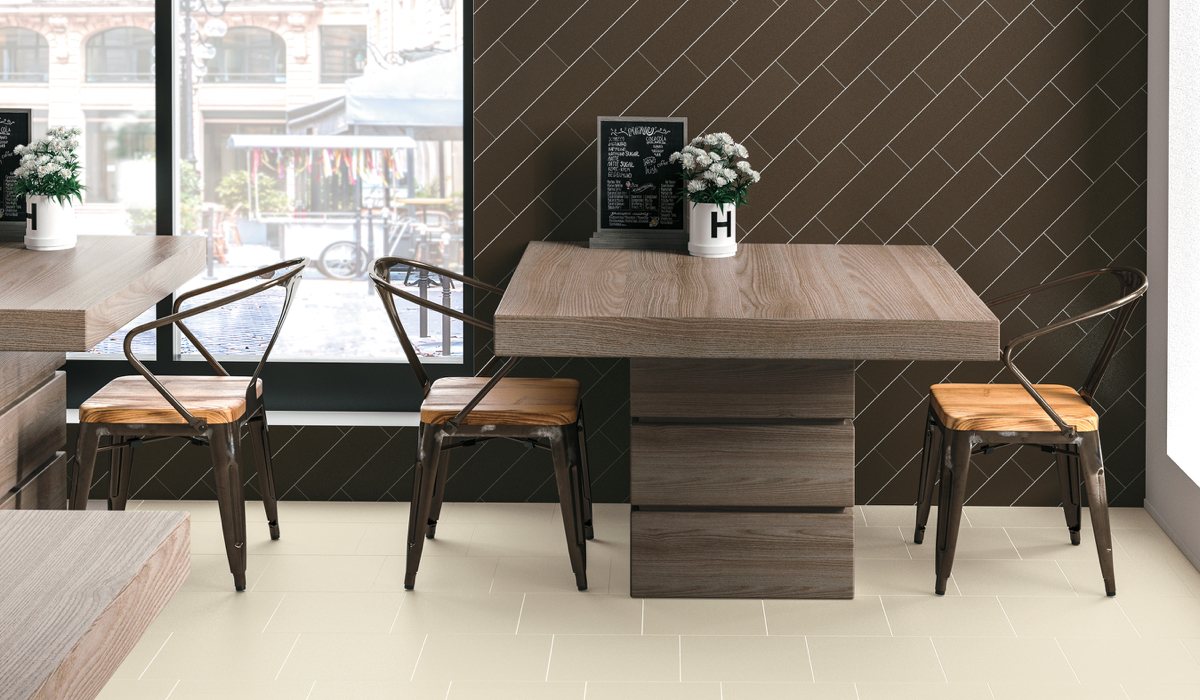
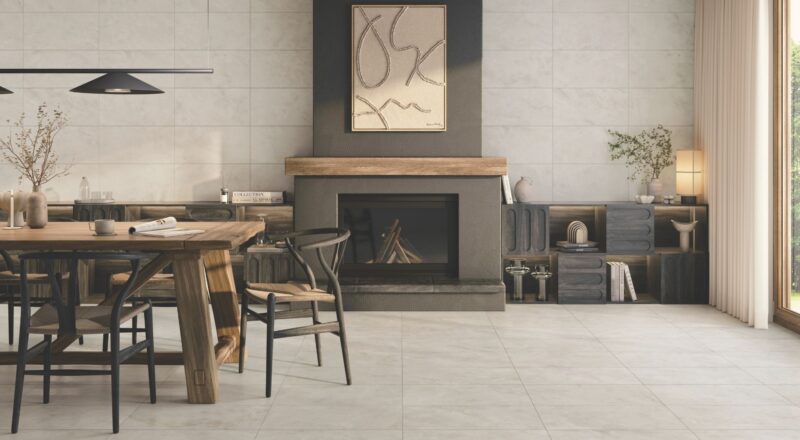
Retro Active 2.0 through-body porcelain floor and wall tile.
The Bottom Line
Through-body porcelain tile helped define the early performance story of porcelain, but it is only one part of today’s tile landscape. Modern manufacturing has made room for color-body and glazed porcelain tile options that offer broader visuals, refined textures, and strong performance for real-world applications.
Understanding the difference gives specifiers more control. Instead of relying on old assumptions, they can choose the porcelain tile construction that best fits the project, whether the priority is full-body consistency, surface design, or a balanced combination of both.
In this video, AHF’s Heidi Vassalotti, Director of Strategic Accounts, explains the real scoop on through-body and surface color in porcelain tile.
Take a Closer Look
Order Your Free Crossville Tile Sample Today
The best way to understand tile is to see it in person. Order a free Crossville tile sample and see how it works in your project. Set up an account to get started—it’s easy, and samples are always free.
Other Great Reasons to Set Up an Account
Save your favorite products and resources.
Create and organize projects.
Review sample order history.