Carbon Reduction Goals

Crossville’s carbon reduction goals continue to guide its long-term efforts to reduce global warming potential across its porcelain tile products. Following an initial energy assessment in 2014, the Crossville operations achieved a 10% reduction in energy usage by 2019, establishing a clear path forward. We are currently working toward a 30% reduction in carbon impact from the 2014 baseline by 2030 at the Crossville facility.
Carbon-Neutral Porcelain Tile
Crossville’s carbon-neutral porcelain tile collections are expanding, growing from the initial launch of two collections in 2023 to seven collections today. These products reflect in part Crossville’s long-term strategy for managing embodied carbon, as measured through life-cycle assessments and reported in its EPDs, while maintaining the performance and design flexibility required for commercial and residential applications.
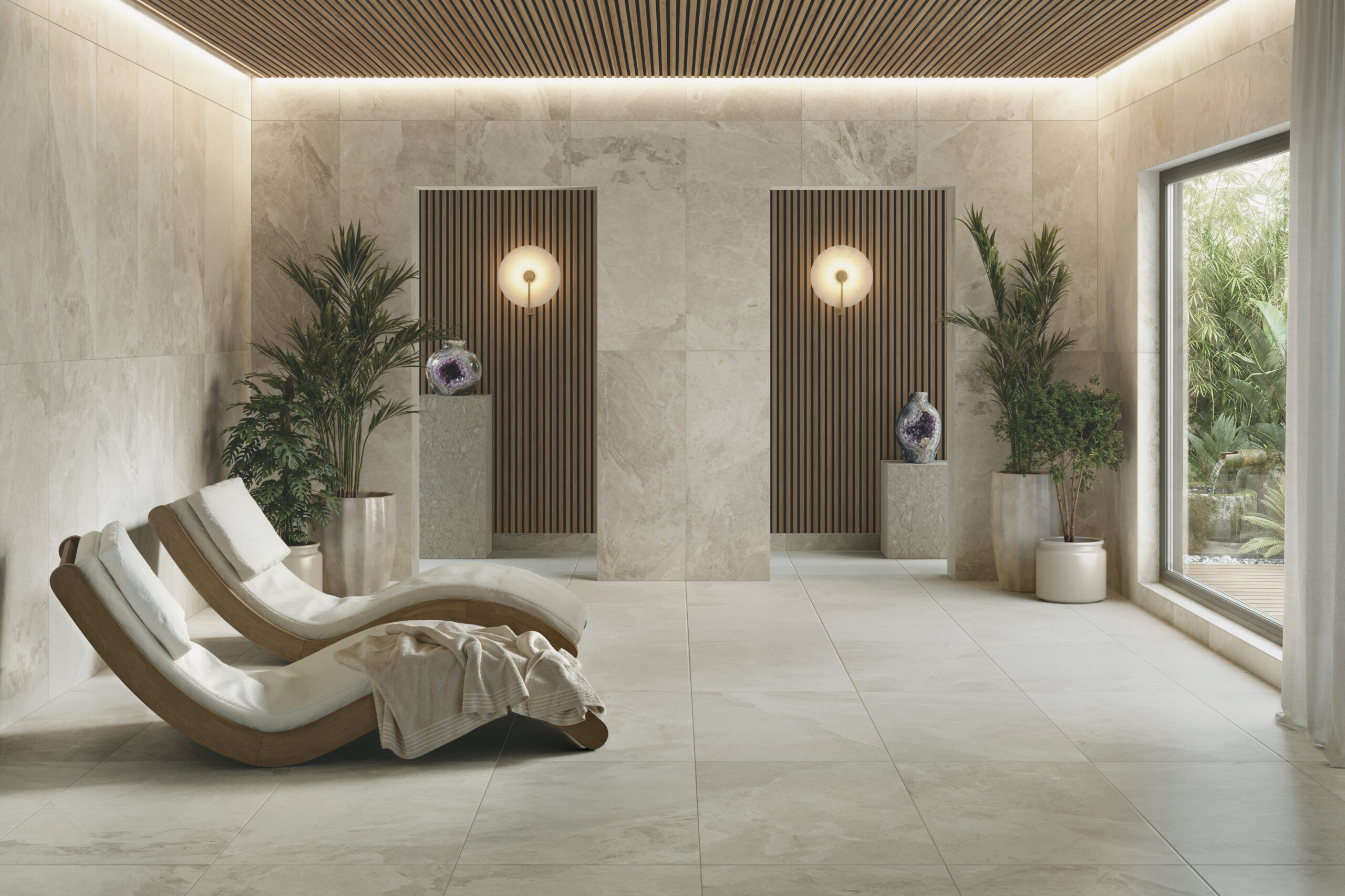
Cleve™ is our latest carbon-neutral porcelain tile collection.
Some impacts cannot yet be eliminated through product and process improvements alone, so Crossville also purchases carbon credits to help offset embodied carbon. Because we consider the carbon footprint of our porcelain tiles from inception through demolition, recycling, or destruction, Crossville’s carbon credits do more for the embodied carbon in built environments.
Why Crossville’s Carbon Credits Do More
Crossville doesn’t just purchase credits to offset the embodied carbon associated with manufacturing. That’s what other manufacturers call “cradle to site” or “cradle to gate” carbon reduction. Crossville goes further by purchasing credits that offset the embodied carbon of our tiles through the entire product lifecycle. By taking into account the carbon footprint of our tiles from inception through demolition and destruction, Crossville’s “cradle to grave” carbon credits do more for the environment.
Recycled Content in Crossville Porcelain Tile
Recycled content continues to be engineered into Crossville porcelain tile as part of the manufacturing process, with measurable increases over time. Our US-made porcelain tile collections now include up to 15% recycled content (download the recycled content guide here).
Transparency and Documentation
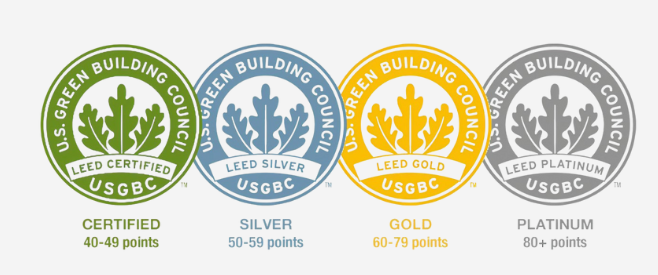
Integrity is everything at Crossville, but you don’t have to take our word for it. We offer an extensive array of third-party certifications and verifications for our sustainable actions.
Crossville’s products can contribute to LEED as well as other green building projects and support informed specification through third-party documentation, including Environmental Product Declarations (EPDs), Health Product Declarations (HPDs), and Declare labels.
Regional Credit Multiplier
Crossville-manufactured tile can also contribute to the LEED V4/4.1 regional credit multiplier. This credit provides products sourced (extracted, manufactured, and purchased) within 100 miles of the project site to be valued at twice their base contributing cost, up to a maximum of 200% of cost. This applies to the EPD, sourcing of raw materials, and material ingredient credits. If a project is within 100 miles of Crossville’s Tennessee-based factory – zip code 38555 – your project may qualify for this increased contribution.
Green Squared® Certifed
Additionally, all Crossville-manufactured porcelain tile collections are Green Squared® certified. Green Squared is the tile industry’s standard for sustainability and uses the transparency and consensus of the ANSI process, combined with third-party certification to evaluate, validate, and communicate products that have a positive impact on the environment and society.
Responsible Manufacturing in Crossville, Tennessee
Manufacturing in Crossville, Tennessee, places production close to abundant natural raw materials while supporting careful control of the manufacturing process. That process includes filtering and recirculating wastewater to reduce water consumption, recycling all cardboard in our manufacturing facilities, and recycling unfired and fired scrap tile back into first-grade products. Together, these practices help Crossville operate as a net consumer of waste.
Sustainability at Crossville isn’t defined by a single initiative or annual total. It’s reflected in how porcelain tile is made every day—through responsible material use, carbon-neutral collections, and transparent documentation that supports better design decisions. Download the AHF Sustainability Report here