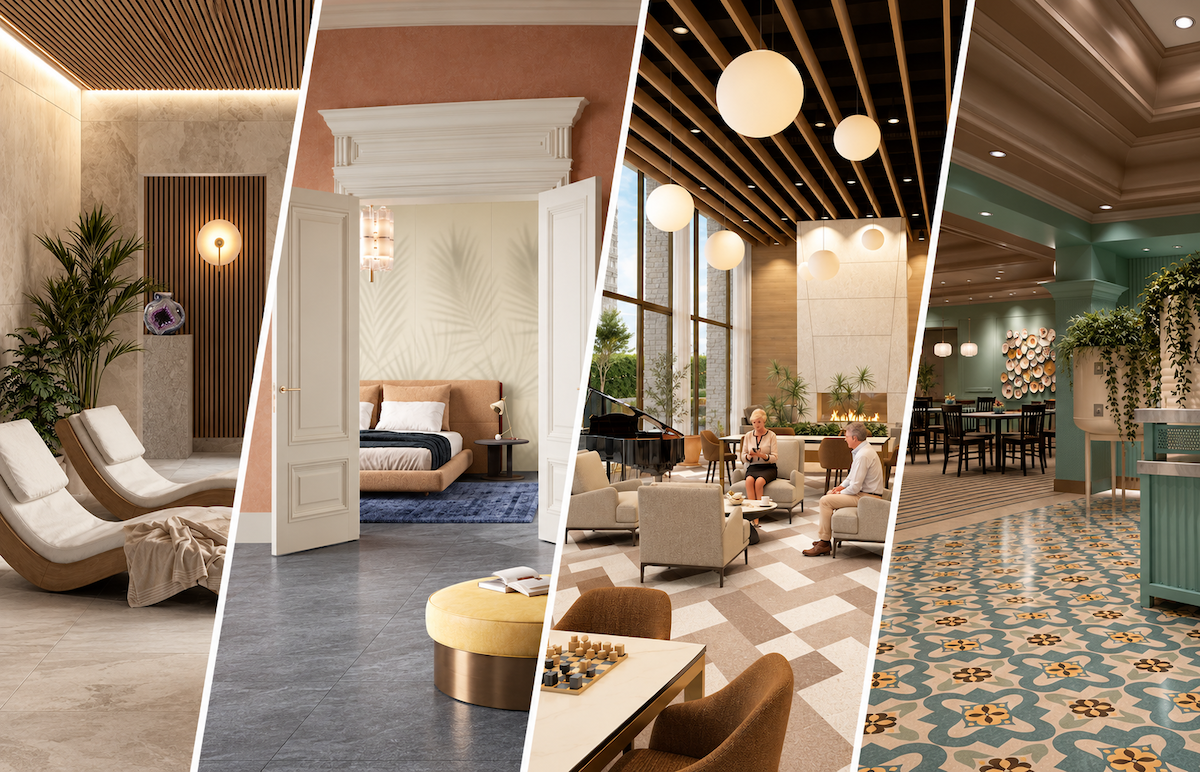
Hospitality design covers a lot of ground—literally and otherwise. A hotel or resort may move from a dramatic lobby to intimate guest rooms, restaurants and bars, spas and fitness areas, corridors, bathrooms, pool decks, patios, courtyards, and back-of-house spaces, each with its own aesthetic and performance requirements.
That breadth makes surfaces an important part of the design vocabulary. Crossville® porcelain tile and porcelain panels can surface floors and walls, indoors and out, giving designers options for virtually every area of a hospitality property. Armstrong Flooring® VCT brings a different set of possibilities underfoot, with a broad color palette, modular patterning, and waterjet cutting for custom designs.
The common thread is design freedom: materials that can help establish a mood, reinforce a brand, create visual continuity, or make a memorable statement while standing up to commercial use.
A Softer Side of Hospitality with Porcelain Tile
Hospitality interiors have increasingly embraced a more relaxed approach to luxury. Natural materials, restorative neutrals, tactile finishes, and residential influences can make hotel lobbies, guest rooms, spas, restaurants, lounges, and other shared spaces feel more comfortable without losing their sense of refinement.
Crossville porcelain floor and wall tile brings that softer material direction to commercial hospitality spaces through two distinct surface technologies.
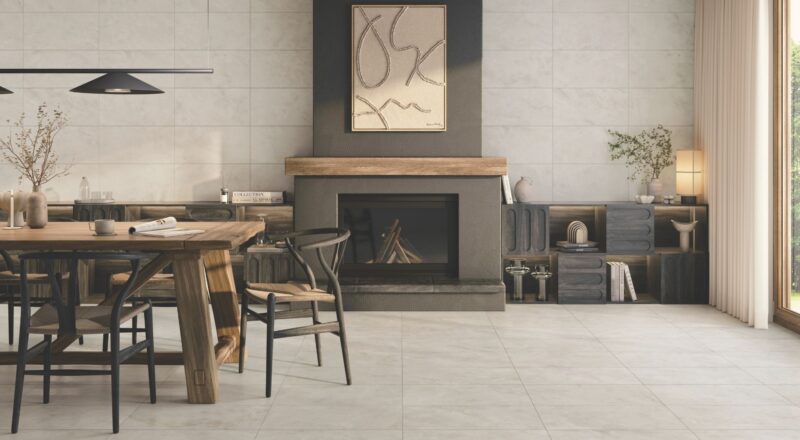
Cleve™ porcelain tile translates the layered structure, crystalline detail, and veining of quartzite into porcelain. The collection features Crossville’s proprietary FeatherSoft™ technology, an exceptionally smooth, silky surface engineered into the manufacturing process rather than applied as a coating. FeatherSoft provides a softer tactile experience while meeting DCOF recommendations for interior floor applications. Learn more about Cleve porcelain tile.
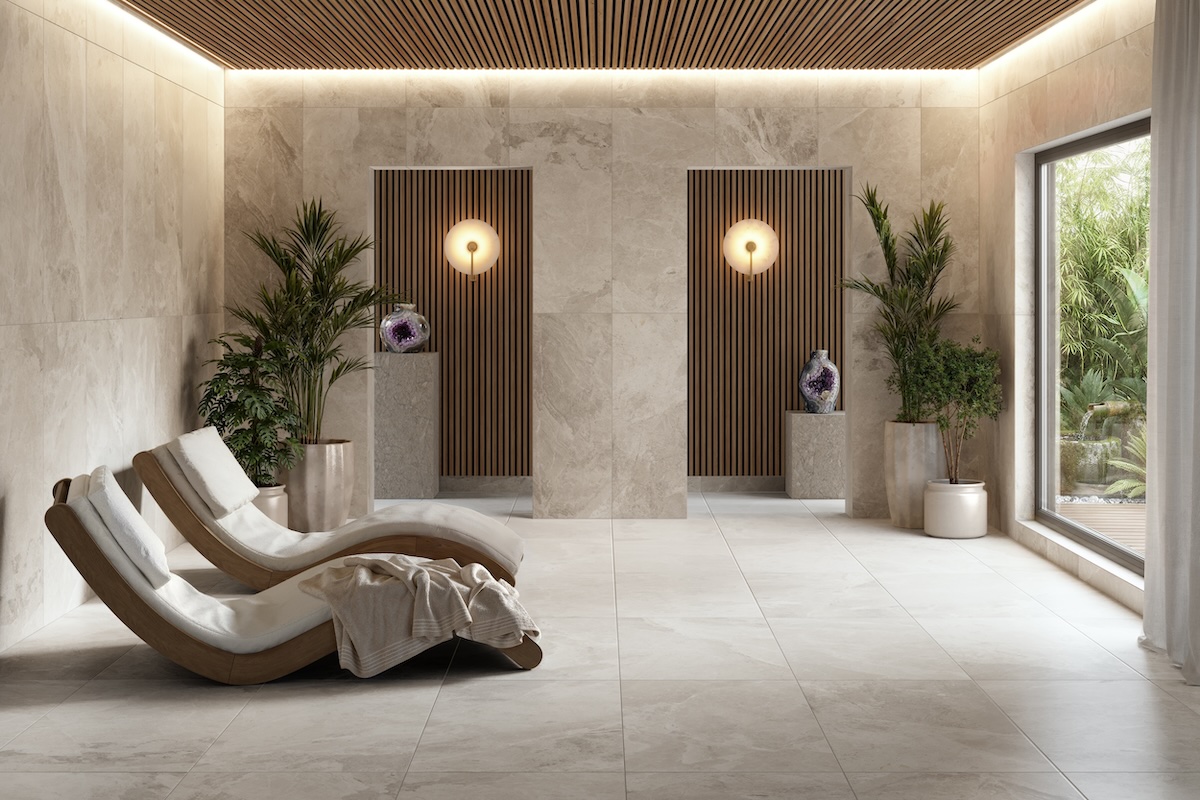
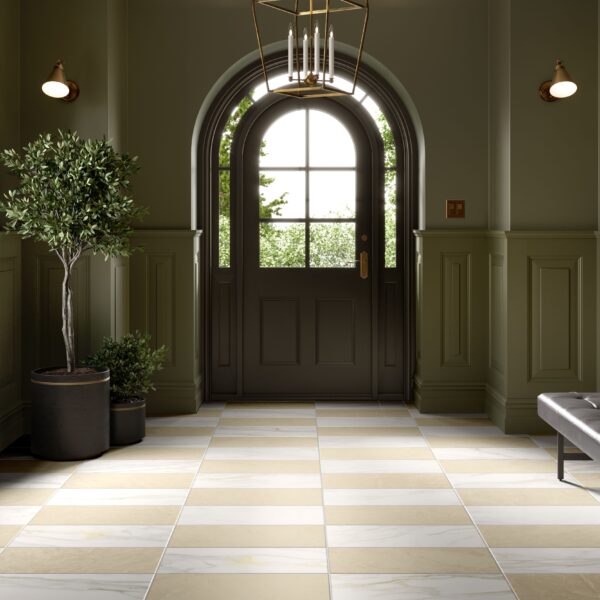
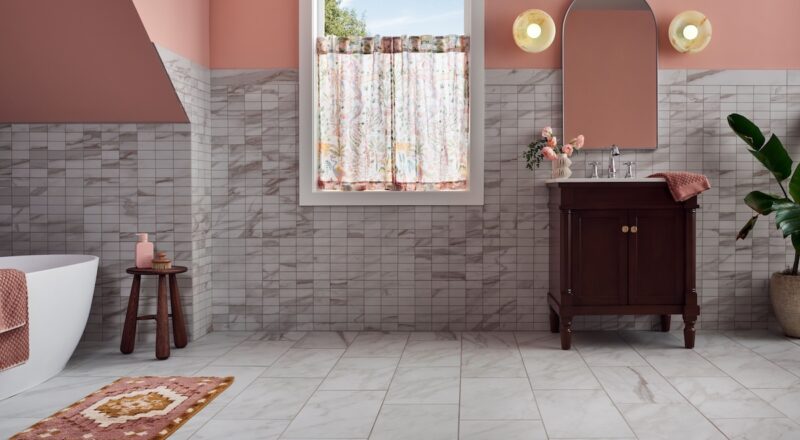
Reunited™ porcelain tile takes classic marble in a more relaxed direction. Gentle movement, three versatile neutral colorways, and the smooth matte FeatherSoft finish give the collection a softer visual and tactile character that works naturally in contemporary hospitality interiors. Reunited also offers coordinated field tile, mosaics, trim, and an exterior finish in Avorio, giving designers another way to maintain visual continuity between interior and exterior areas. Learn more about Reunited porcelain tile.
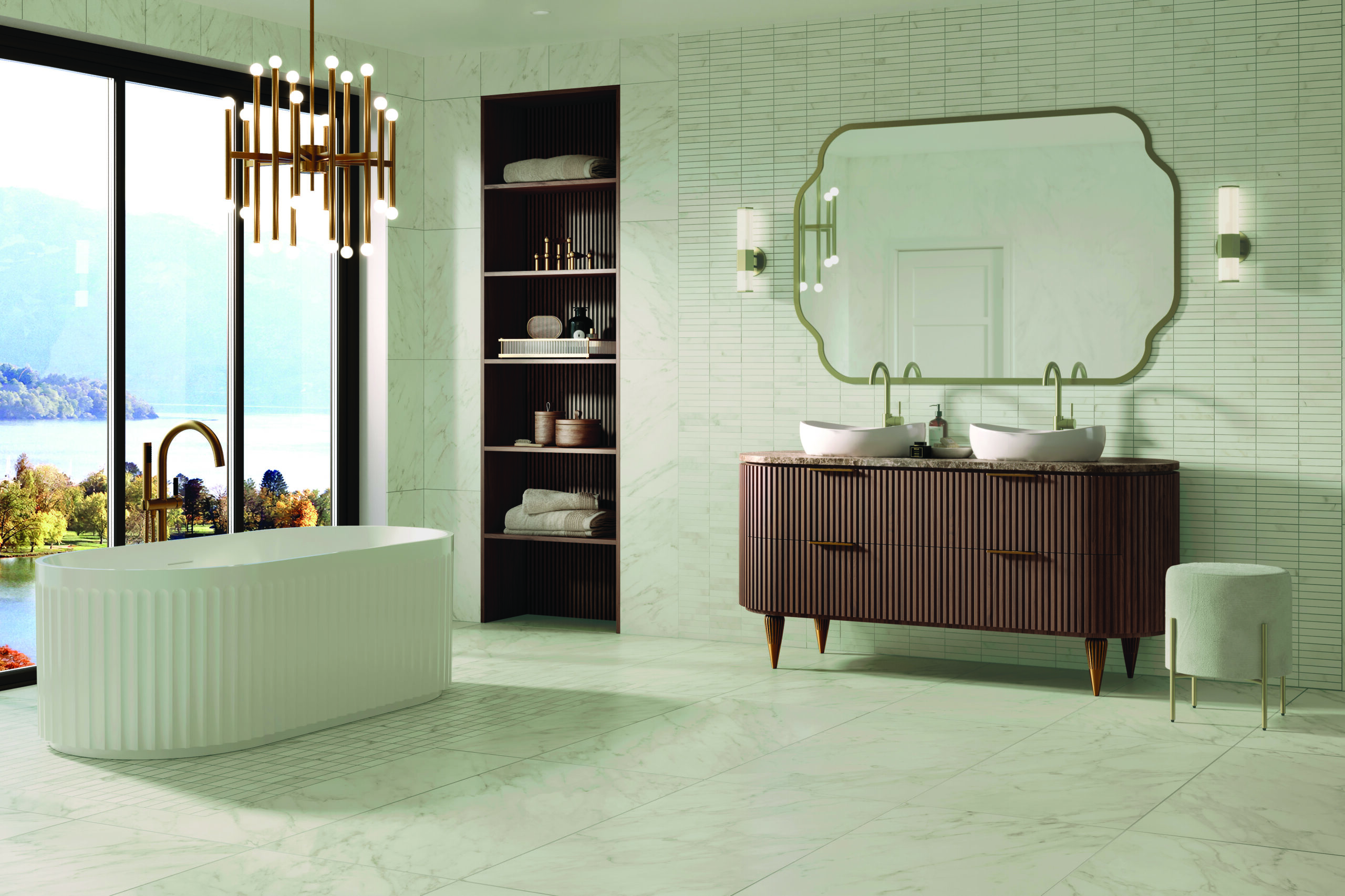
Portland Cliff™ porcelain tile adds a second tactile technology to the mix. Inspired by natural Portland stone, the collection uses Crossville’s innovative Visual Touch Technology™ glazing to follow the stone look’s linear characteristics, veining, and tonal variation. The result connects what the eye sees with what the hand feels. Five restorative neutral colors, 12 x 24 and 24 x 48 field tile, mosaics, trim, and coordinating interior and exterior finishes give Portland Cliff porcelain tile broad flexibility for hospitality design. Learn more about Portland Cliff.
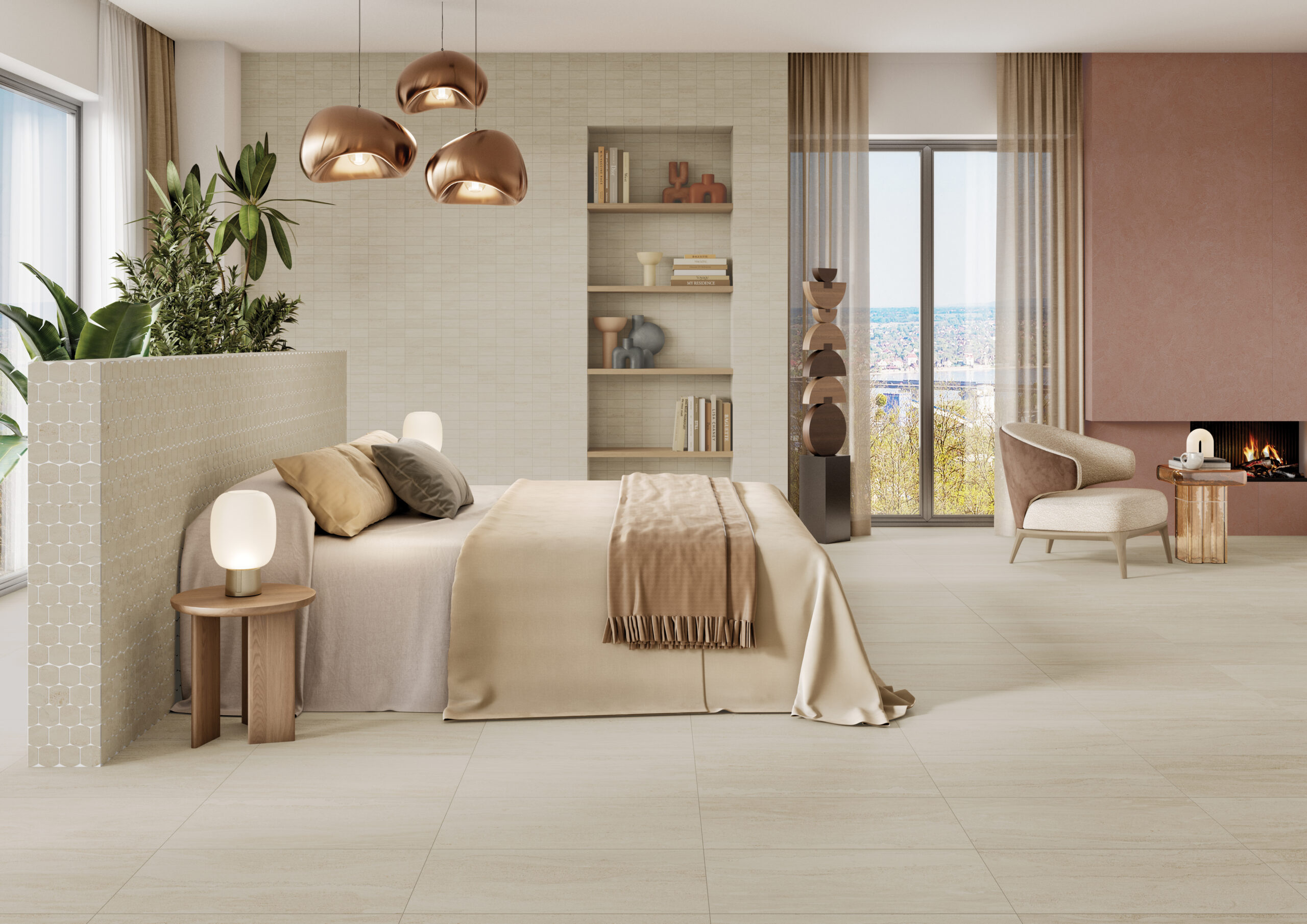
These three porcelain floor and wall tile collections share a calm, tactile aesthetic while offering distinctly different stone looks. Cleve porcelain tile interprets quartzite, Reunited takes marble in a softer direction, and Portland Cliff draws from limestone with Visual Touch Technology.
Tile for the Entire Hospitality Property
That aesthetic story sits within a much broader hospitality tile offering. Crossville tile is designed for use throughout hospitality environments, from grand lobbies and guest rooms to back-of-house and exterior spaces. The company’s hospitality portfolio includes solutions for lobbies, restaurants, coffee shops, feature walls, elevator corridors, indoor pools, spas, fitness centers, restrooms, guest room floors and baths, shower floors and walls, fireplace surrounds, case goods, balconies, and patios.
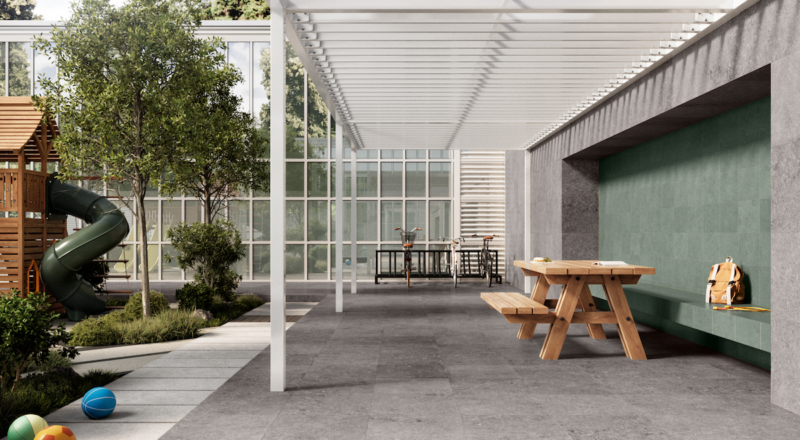
Outdoors, Crossville porcelain and ceramic tile can be used at pool waterlines, fire pit areas, and vertical focal points. The Reunited and Portland Cliff collections offer an exterior finish for enhanced traction, perfect for decking, walkways, and patios. Its low porosity, stain resistance, and ability to withstand freeze-thaw conditions make porcelain especially useful when hospitality design needs to continue beyond the building envelope.
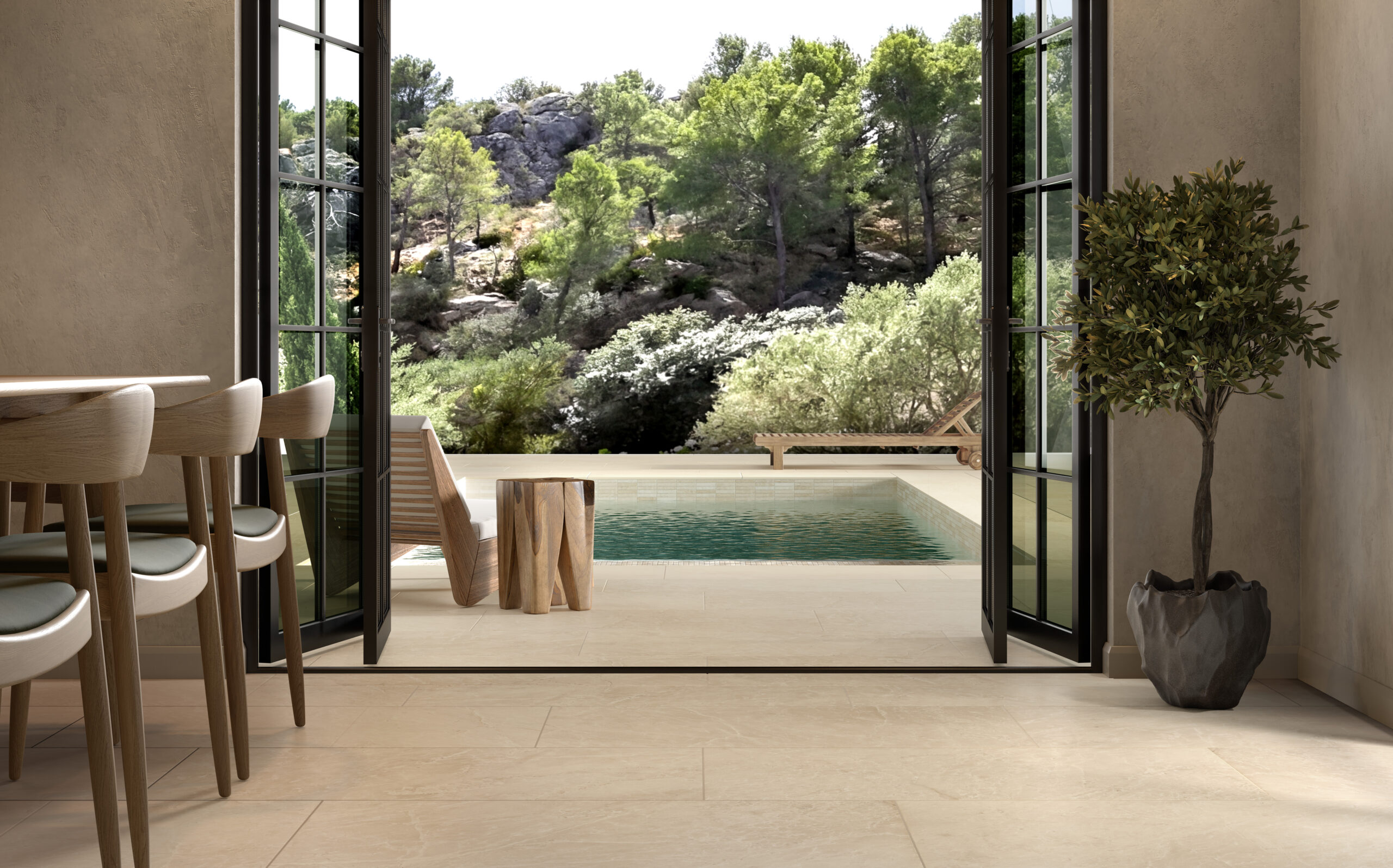 Reunited exterior-finish porcelain tile on hotel pool decking with coordinating interior tiles flowing from restaurant to pool.
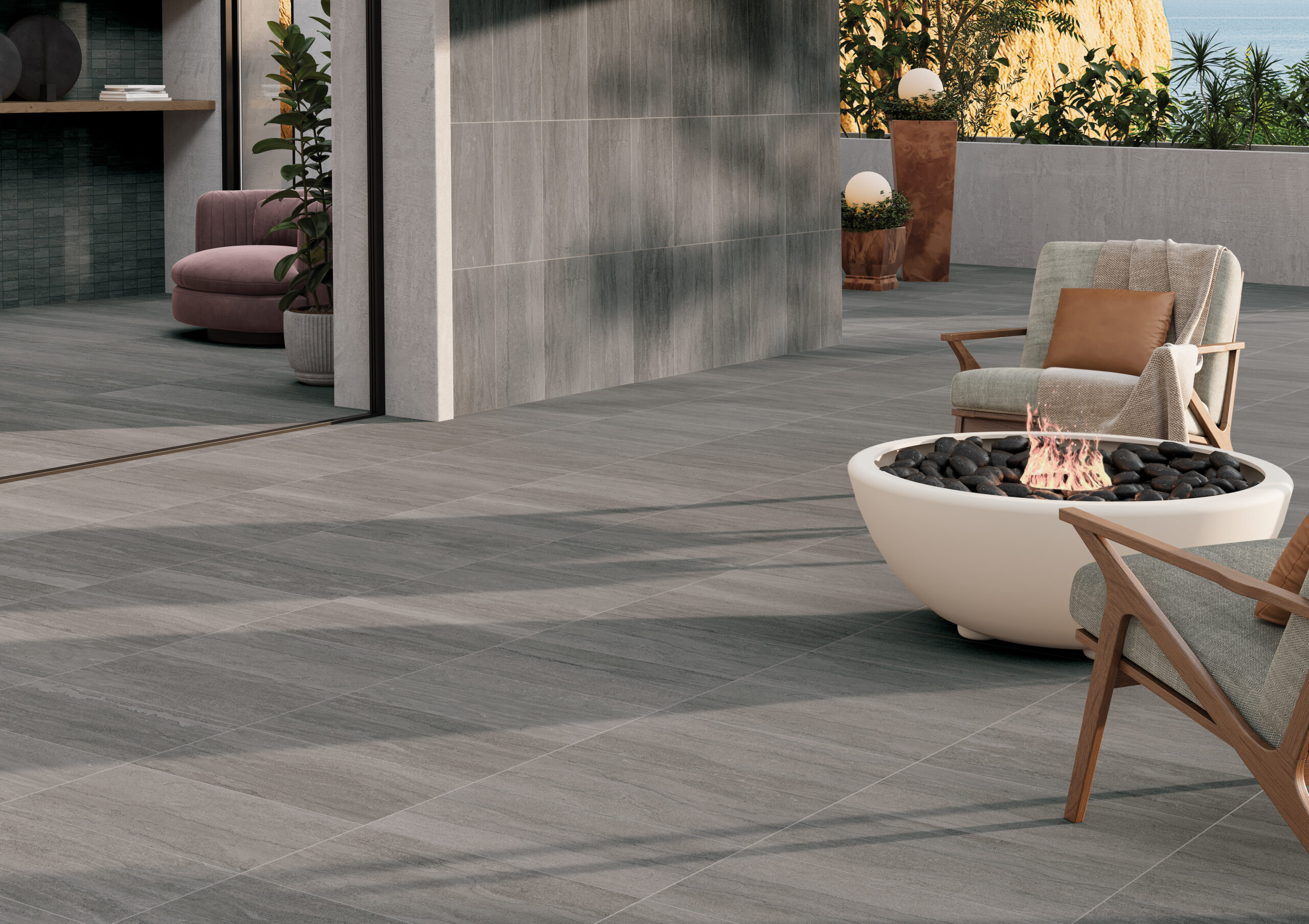 Portland Cliff exterior-finish porcelain tile on hotel patio.
Crossville porcelain tile can carry a coordinated material palette across hotel lobbies, guest rooms, baths, restaurants, spas, corridors, pools, patios, courtyards, and other indoor-outdoor hospitality spaces. Coordinated interior and exterior finishes can help designers carry materials and palettes from a hotel lobby to a courtyard, from a guest room to a balcony, or from an indoor spa environment to an adjacent outdoor area.
Sustainability is integral to all Crossville-made tile. Crossville-manufactured tile is Green Squared Certified, with EPDs and Declare Labels available for the tile it produces. Cleve, Reunited, and Portland Cliff are also carbon-neutral porcelain tile collections.
Go Bigger with Ultra-Thin Porcelain Panels
Hospitality walls offer another opportunity to shape the character of a space, particularly when designers can work at a larger scale. Gemini and Slate ultra-thin porcelain wall panels by Laminam® measure 1 meter by 3 meters, allowing broad surfaces with fewer grout joints. Their scale works naturally for hotel lobbies, restaurants, guest rooms, corridors, elevator banks, feature walls, and other areas where the wall itself becomes part of the design.
Gemini takes its cues from nature with delicate plaster textures, soft tonal hues, organic movement, seven earthy neutrals, and two Flora decos inspired by leaves and wind. Its palette and visuals connect naturally with soft minimalism and biophilic hospitality interiors.
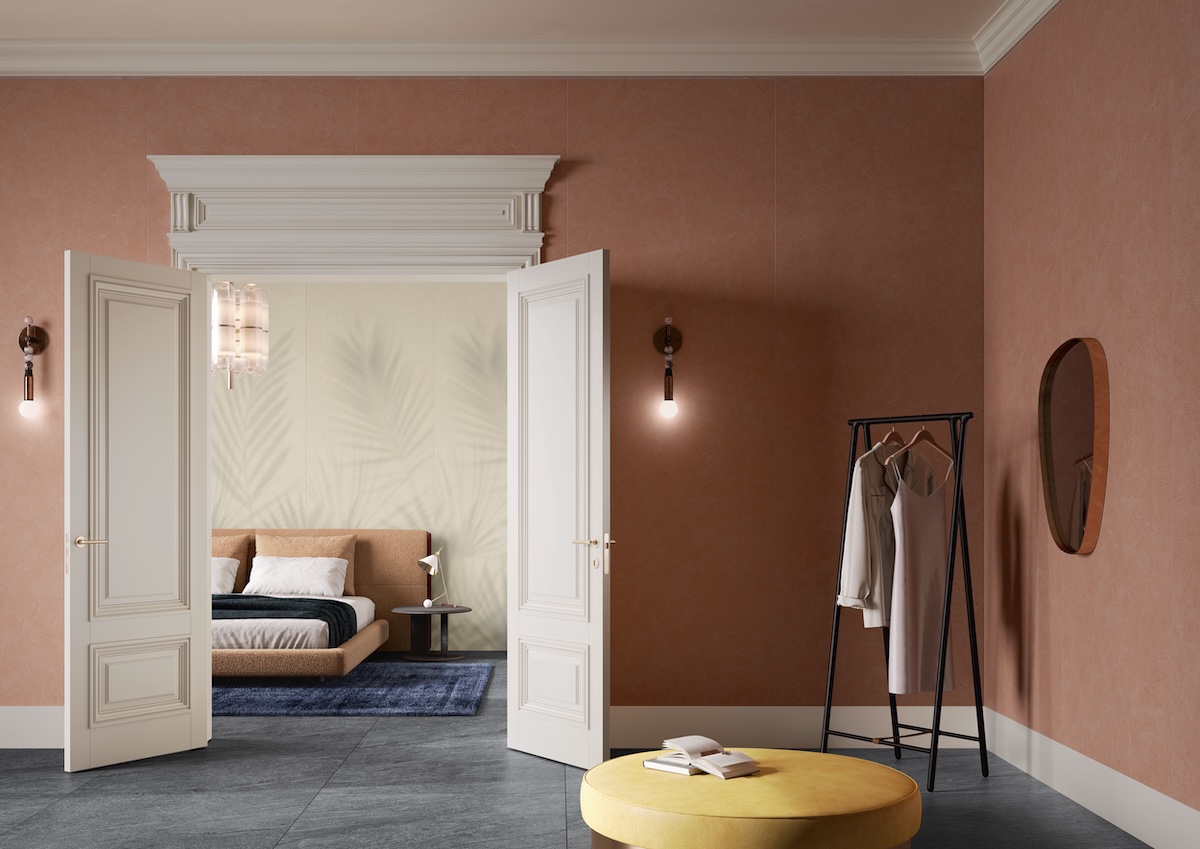
Slate has a different personality. Inspired by natural slate, the collection combines quiet texture and tonal variation with influences from Scandinavian and Japanese design. The result is restrained but expressive, with five colors that range from pale neutrals to deep, saturated tones.
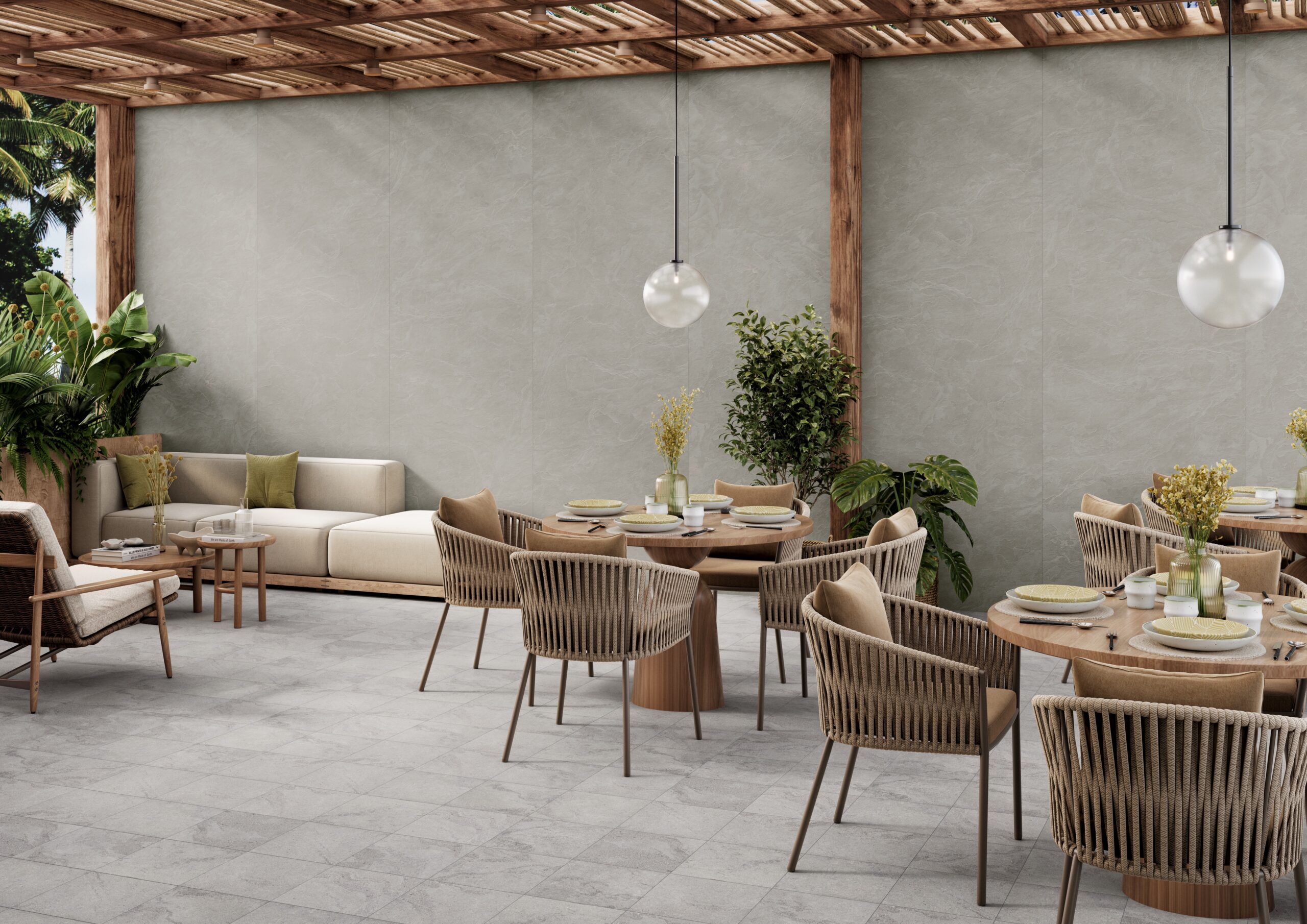
At just 2 mm thick, both collections also use substantially less material than conventional porcelain surfaces. High recycled content and manufacturing with solar-powered hybrid kilns can reduce material, water, and energy use by up to 70% and CO₂ emissions by up to 80%. Their thin profile can also make tile-over-tile installation possible in appropriate renovation conditions, helping reduce demolition, construction waste, and disruption to hotel operations.
VCT Brings Color, Pattern, and Flexibility Underfoot
Crossville porcelain tile and panels can create tactile, stone-inspired, and large-scale surfaces across a hospitality property, yet Armstrong Flooring VCT (vinyl composition tile) opens another design direction underfoot.
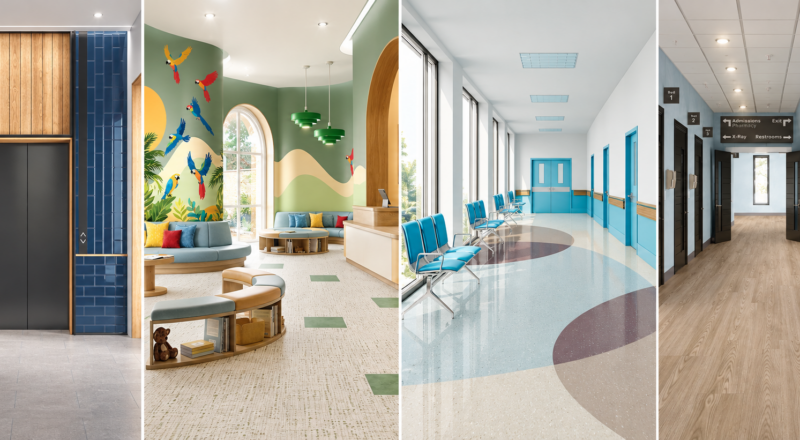
Armstrong Flooring’s Excelon® VCT gives hospitality designers modular flexibility and a broad range of visual options, from neutral tones and color gradients to brighter colors, non-directional and tone-on-tone patterns, organic stone and granite looks, and densely patterned earth tones.
VCT can take on very different roles in hospitality interiors, from restrained floors that support the architecture and furnishings to bold geometric patterns that become part of the identity of a restaurant, lounge, or other public space.
For busy commercial spaces, Excelon VCT combines that design flexibility with true through-pattern construction, long-life value, and resistance to heavy foot and rolling-load traffic. Excelon VCT is manufactured in the USA and has a low-carbon footprint. Its main ingredient is 85% North American limestone, locally quarried to further reduce the product’s carbon footprint. Learn more about why VCT is still a go-to solution for durable commercial flooring.
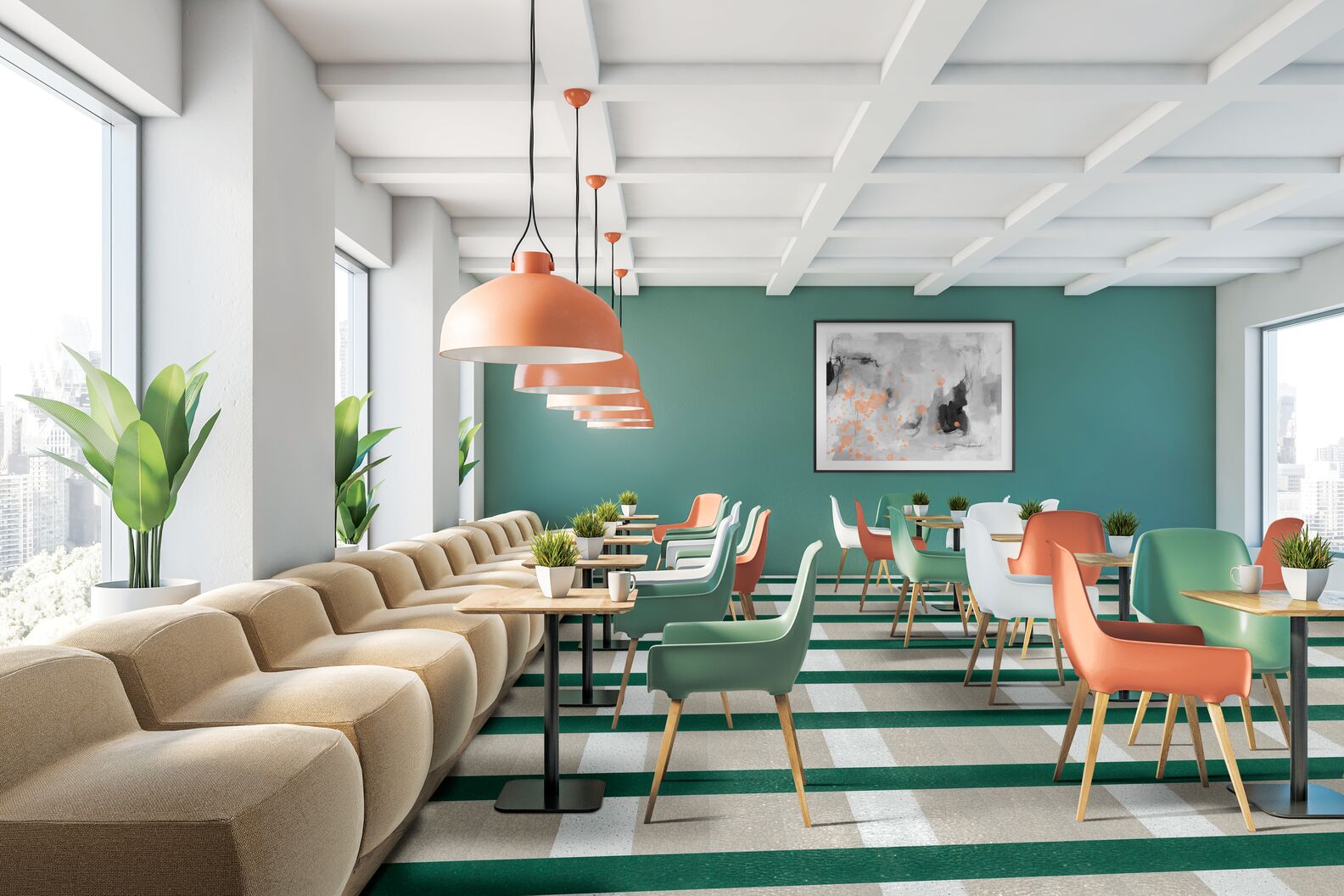 Standard Excelon Imperial Texture VCT —a classic economical value, durable construction combined with neutral hues and bold colors ensures lasting beauty in high-traffic commercial spaces.
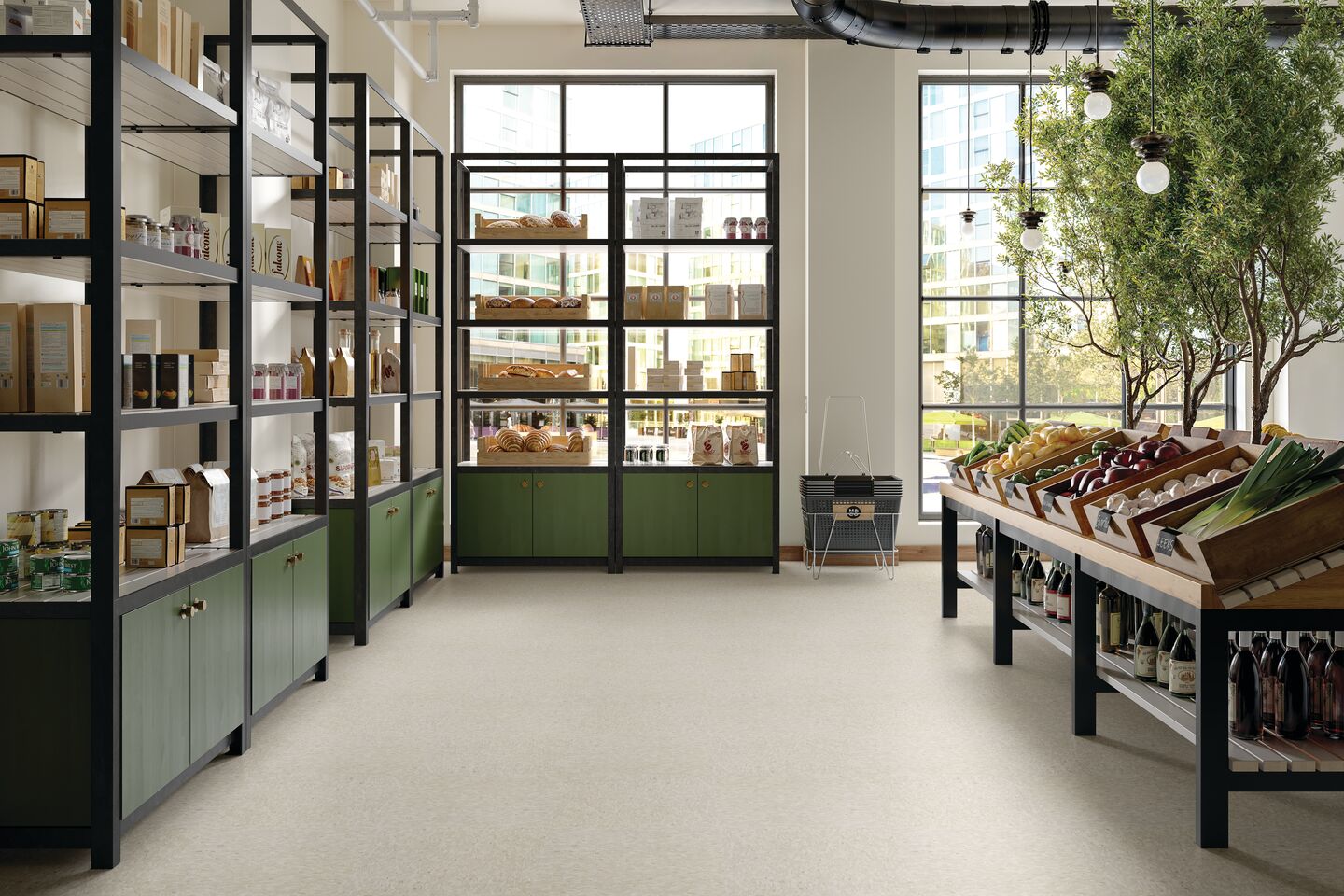
Safety Zone slip-retardant VCT—Safety Zone is made with an embossed surface embedded with proprietary particles for exceptional slip-retardant performance.
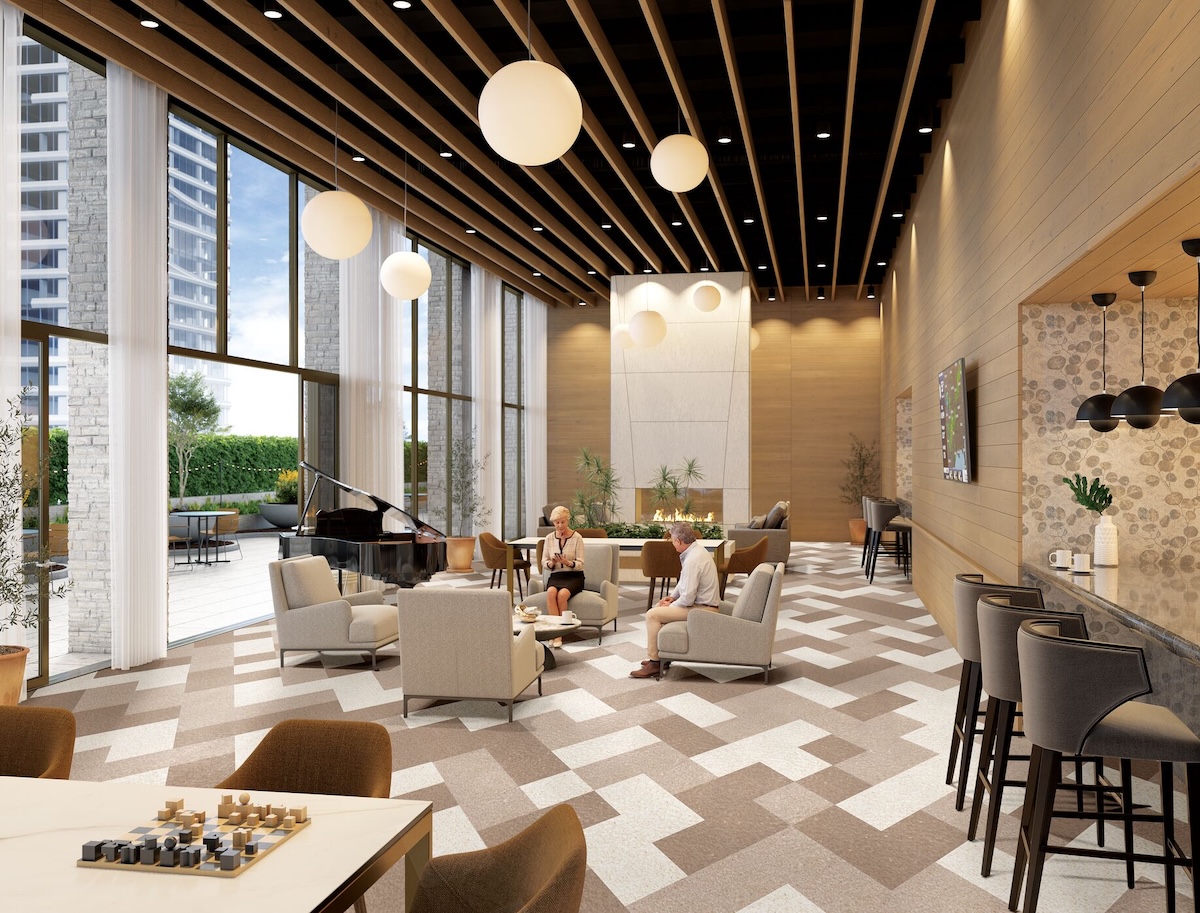
Take VCT Design Further with Waterjet Cutting
VCT already offers considerable freedom in color and geometry, but waterjet cutting opens up even more possibilities for intricate custom designs.
Waterjet cutting can transform VCT into precise custom accents, borders, wayfinding elements, logos, design motifs, and other detailed insets. For hospitality designers, that means a floor can become specific to the property rather than simply coordinating with it.
For example, a boutique hotel might introduce a waterjet-cut motif related to its location, or a restaurant could carry a graphic identity into the flooring. Resorts and large hospitality properties can use custom VCT designs for wayfinding or to distinguish different areas within a larger public space.
Because the design is created from VCT itself, custom waterjet flooring retains the through-color and through-pattern construction that helps Excelon VCT maintain its visual character as the surface wears.
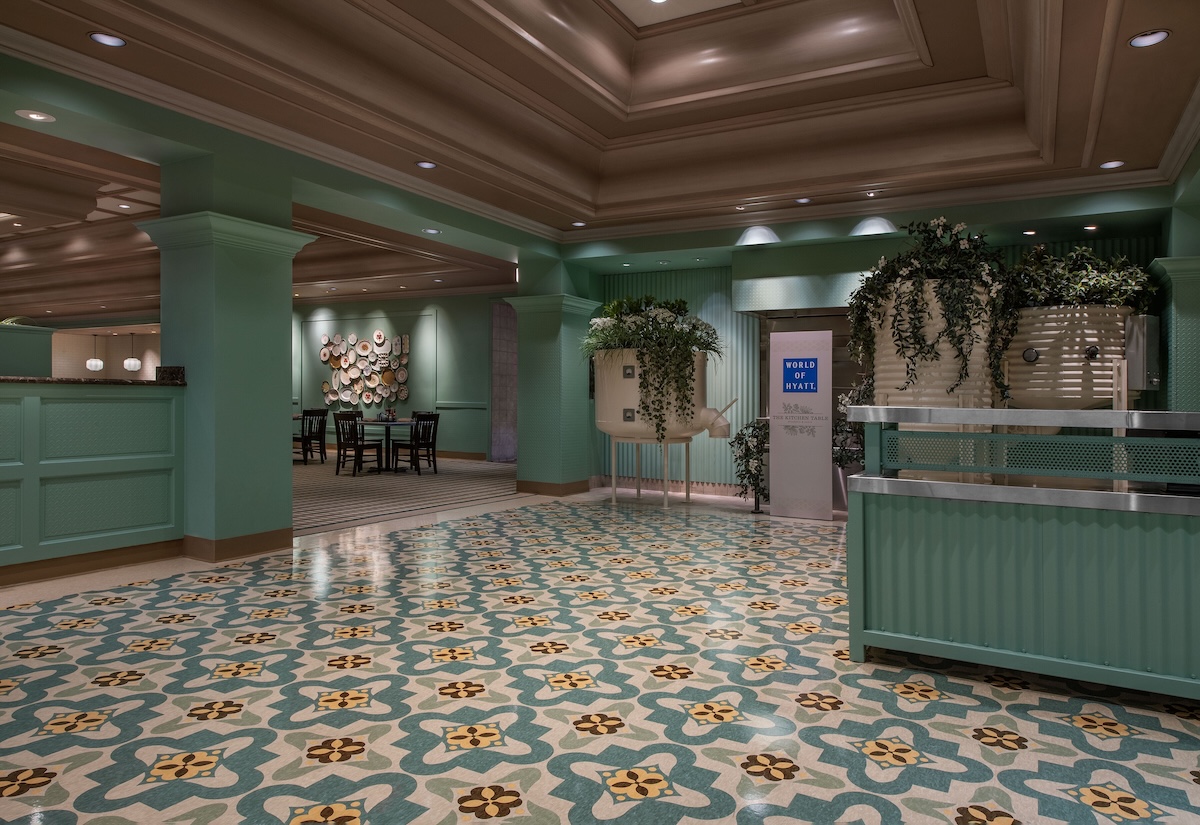
Waterjet-cut VCT flooring for The Kitchen Table, a high-volume modern American breakfast and lunch spot inside the Rio Hotel & Casino in Las Vegas. Inspired by vintage Route 66 diners, the design balances nostalgia with purpose. Read the case study.
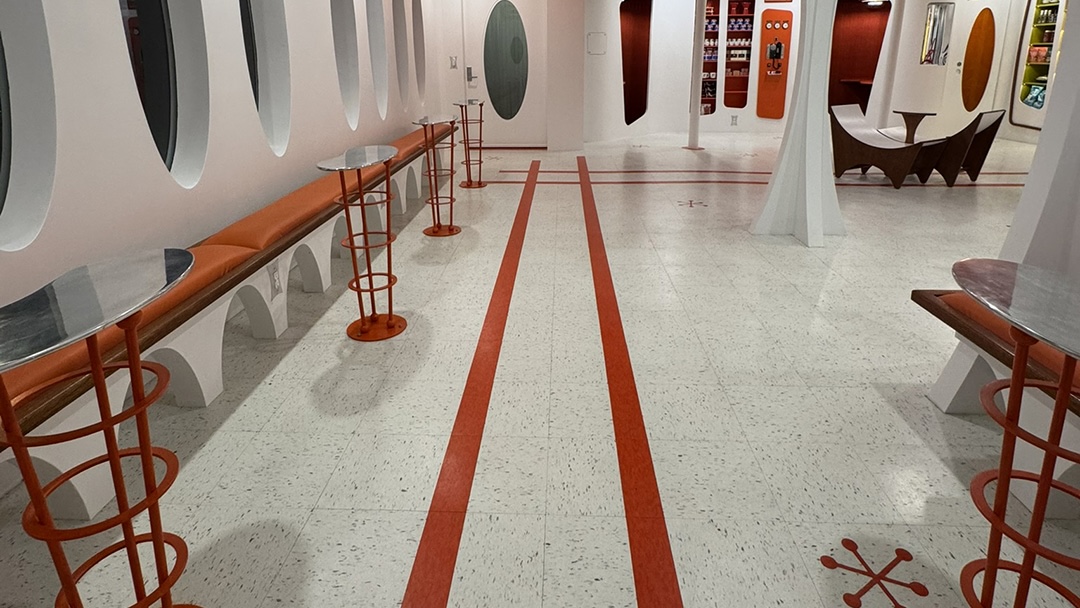
A compelling example of VCT’s creative potential is this striking coffee shop designed by master craftsman Ricky TeeVee. The space employs custom-cut VCT to channel a retro-futurist vision—an homage to mid-century space-age aesthetics reimagined for a contemporary audience. Read the design story.
More Freedom to Design the Hospitality Experience
No single hospitality aesthetic exists, and there shouldn’t be a single way to approach its surfaces. A luxury hotel may call for tactile marble-look porcelain tile in the lobby, restorative neutrals in the spa, coordinated interior and exterior tile around a courtyard or pool, and large-format porcelain panels on guest room or restaurant walls. Another property may use graphic VCT patterns or custom waterjet-cut flooring to create a completely different identity.
Across hotel lobbies, guest rooms, restaurants, bars, spas, bathrooms, corridors, fitness areas, pools, patios, courtyards, and back-of-house spaces, Crossville porcelain tile, porcelain panels, and Armstrong Flooring VCT give hospitality designers a wide range of ways to work with texture, scale, pattern, color, and customization—without separating the design idea from the durability the space requires.
Great Design Starts with a Sample!
You can easily order flooring samples directly from the product pages for all of these products. Seeing the colors, patterns, textures, and finishes in person makes it easier to compare options, coordinate materials, and choose confidently for your healthcare project.