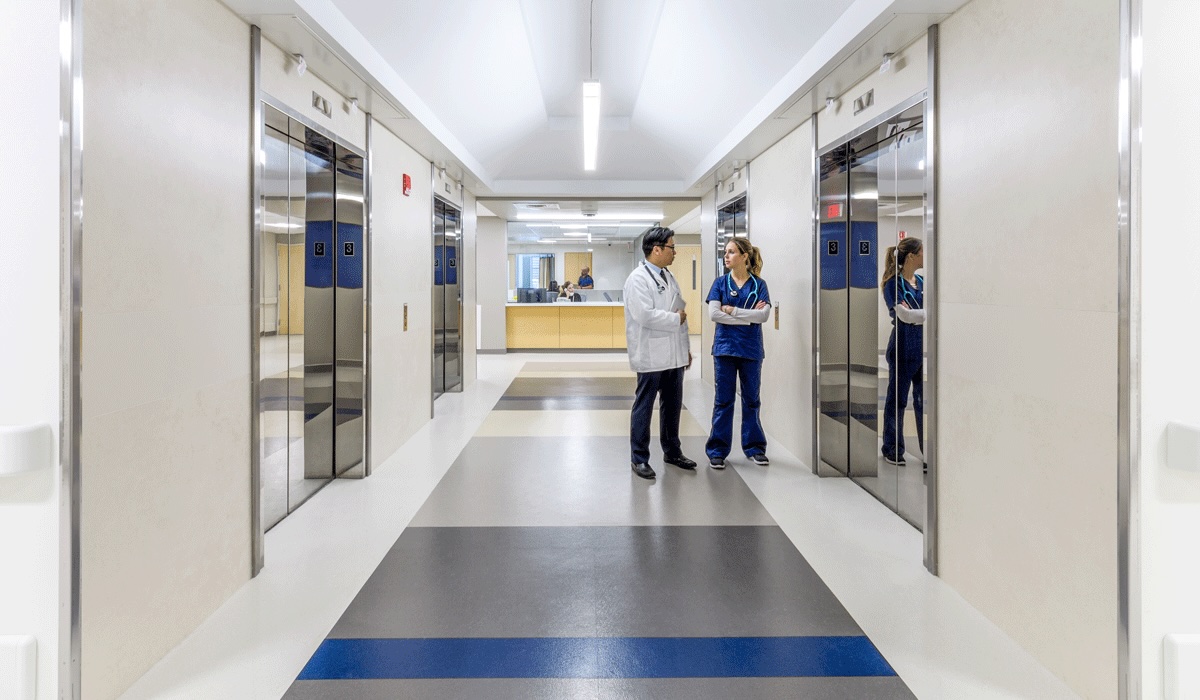
Blend porcelain tile panels on elevator bank walls.
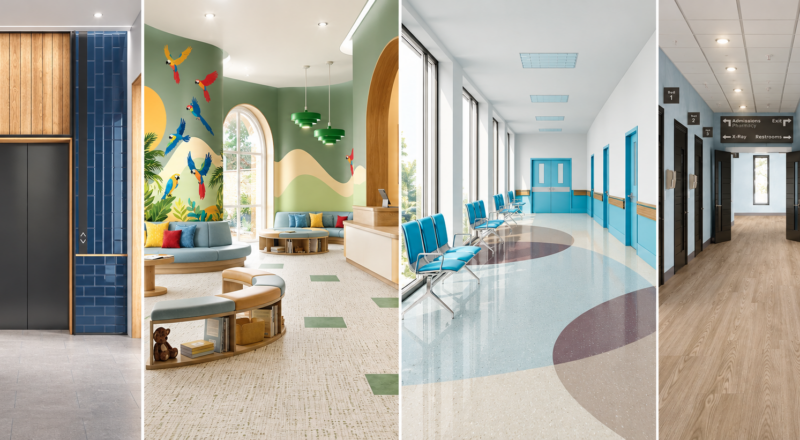
Healthcare facility surfaces have to work as hard as the people who use them. For busy hospital corridors, patient bathrooms, medical office lobbies, and building exteriors, floors and walls must withstand frequent cleaning, constant activity, and years of use while creating comfortable, welcoming environments for patients, visitors, and staff.
Porcelain tile panels withstand heavy traffic, frequent cleaning, and moisture exposure while offering a wide range of design options, making them particularly well suited to hospitals, medical offices, and other healthcare facilities. Their large dimensions, low porosity, and thin profiles enable applications that conventional surfacing materials can’t achieve.
For years, architects and designers nationwide have specified Crossville® Porcelain Tile Panels by Laminam® for healthcare projects, addressing design challenges from protecting busy corridor walls to renovating building exteriors.
Cleanability and Durability in Healthcare Environments
Healthcare facilities and hospital interiors take a beating. Carts, gurneys, and medical equipment regularly bump against walls in busy corridors, reception areas, and elevator lobbies. Meanwhile, patient bathrooms and treatment areas need surfaces that stand up to frequent cleaning and moisture exposure.
Porcelain tile panels provide a dense, low-porosity surface that resists stains and moisture and is easy to clean. Their 1 x 3 meter size (that’s over 32 square feet!) reduces the number of grout joints compared with conventional tile installations (up to 95% less), leaving fewer joints to clean and maintain and reducing opportunities for mold and mildew.
Porcelain panels are particularly valuable in high-traffic areas where painted drywall and other wall finishes could need frequent repair or replacement. Porcelain also contains no PVC or formaldehyde and does not emit VOCs, supporting healthcare projects where material composition and indoor environmental quality matter.
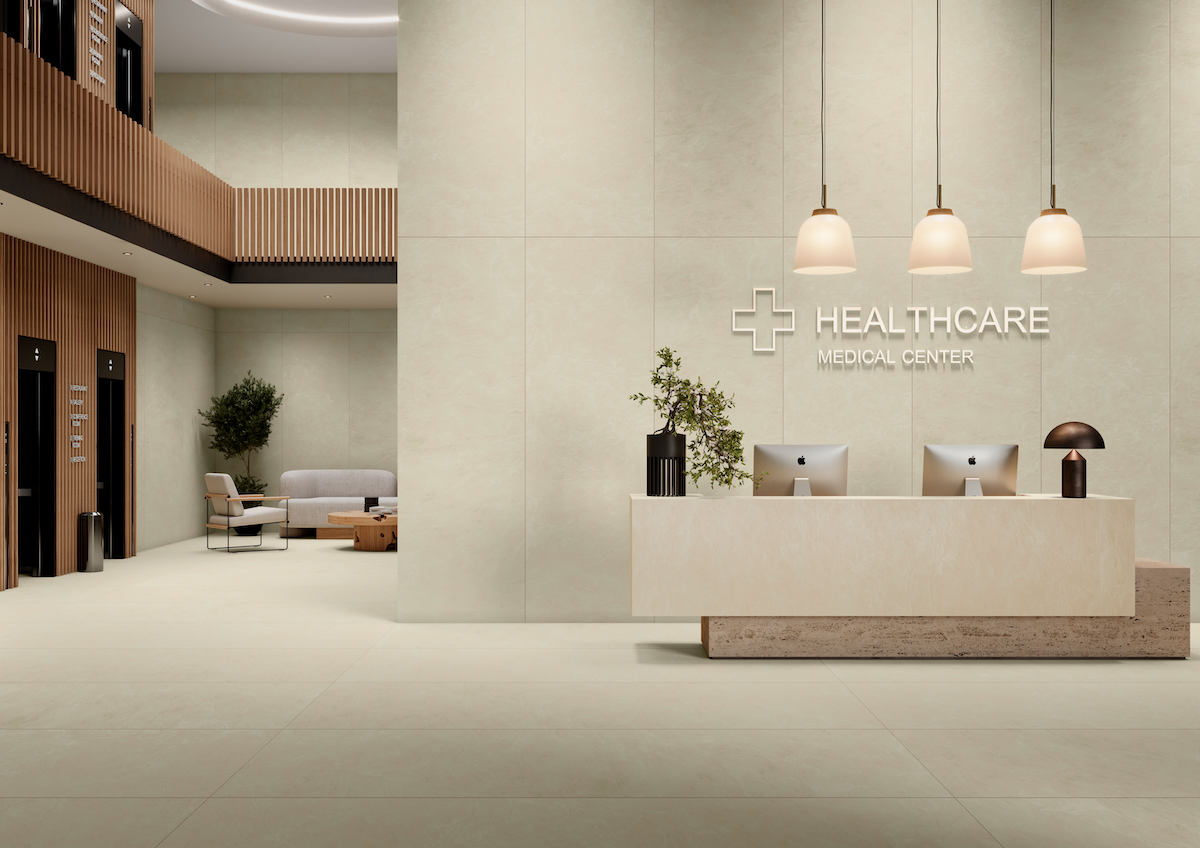
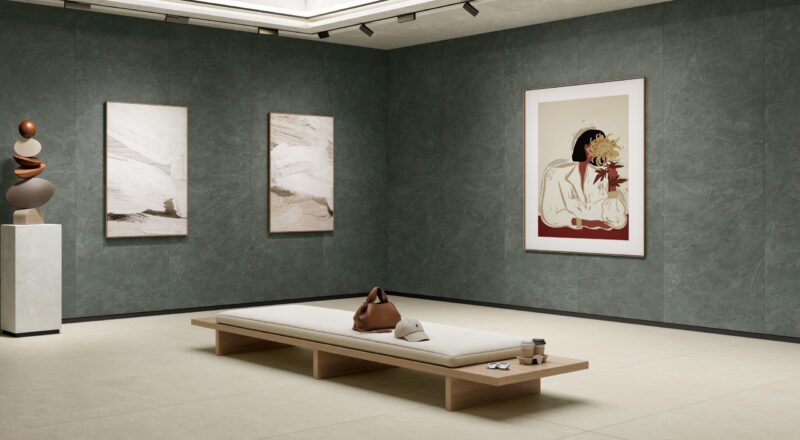
Slate porcelain panels on floors and walls.
Design Flexibility for Patient-Centered Healthcare Spaces
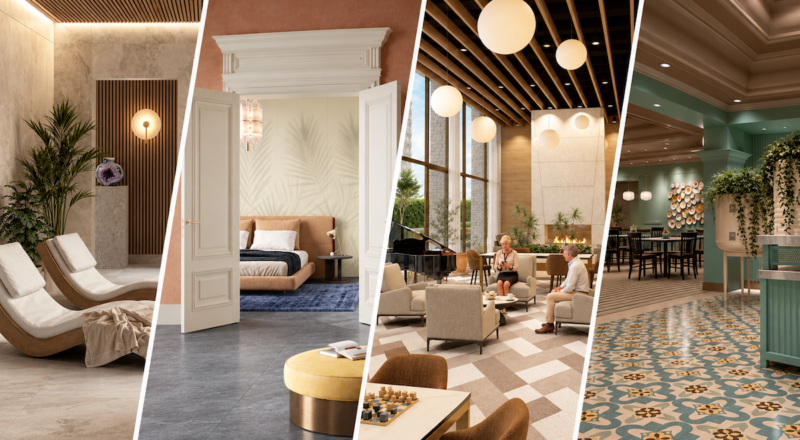
More and more, healthcare interior design is increasingly drawing inspiration from hospitality and residential environments, with warmer colors, natural textures, and sophisticated looks replacing traditionally institutional aesthetics.
Porcelain tile panels mimic many natural stones, including travertine, slate, and a variety of beautiful marbles from around the world. Other looks include the industrial character of concrete and the distinctive patinas of metal, with finishes ranging from smooth and polished to matte and textured. Their expansive dimensions and minimal grout joints create a sleek, nearly seamless appearance on both floors and walls.
Porcelain tile panels also offer flexibility for challenging architectural features, including curved walls. Installers can cut panels to accommodate electrical outlets, switches, and HVAC vents.
At Rockets Orthopedic Hospital, the design team faced an additional challenge: the lobby wall surface needed to follow an existing curve. I Naturali in Calacatta Michelangelo was selected in part for its ability to accommodate the curved installation.
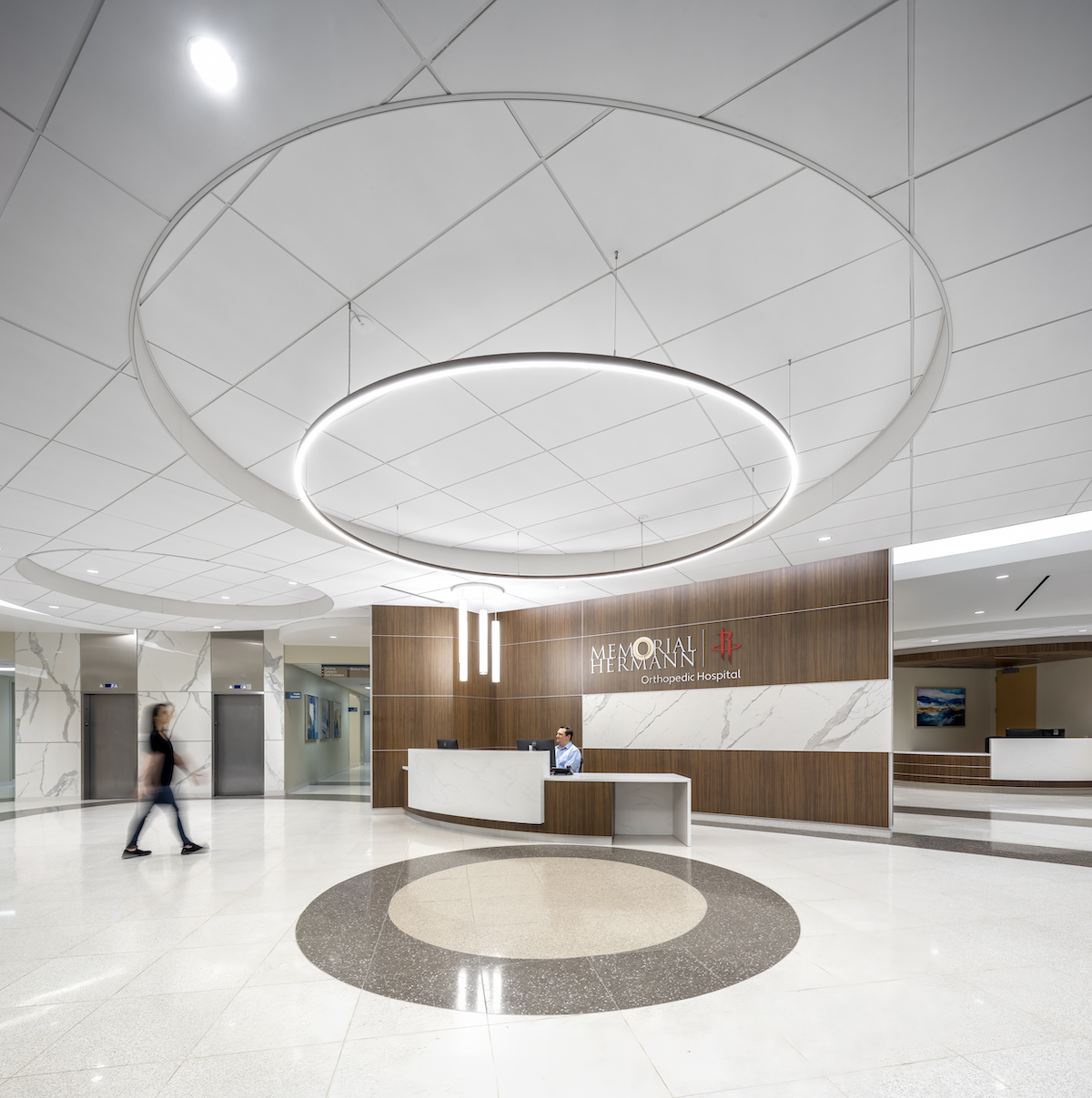 Photo by Slyworks Photography
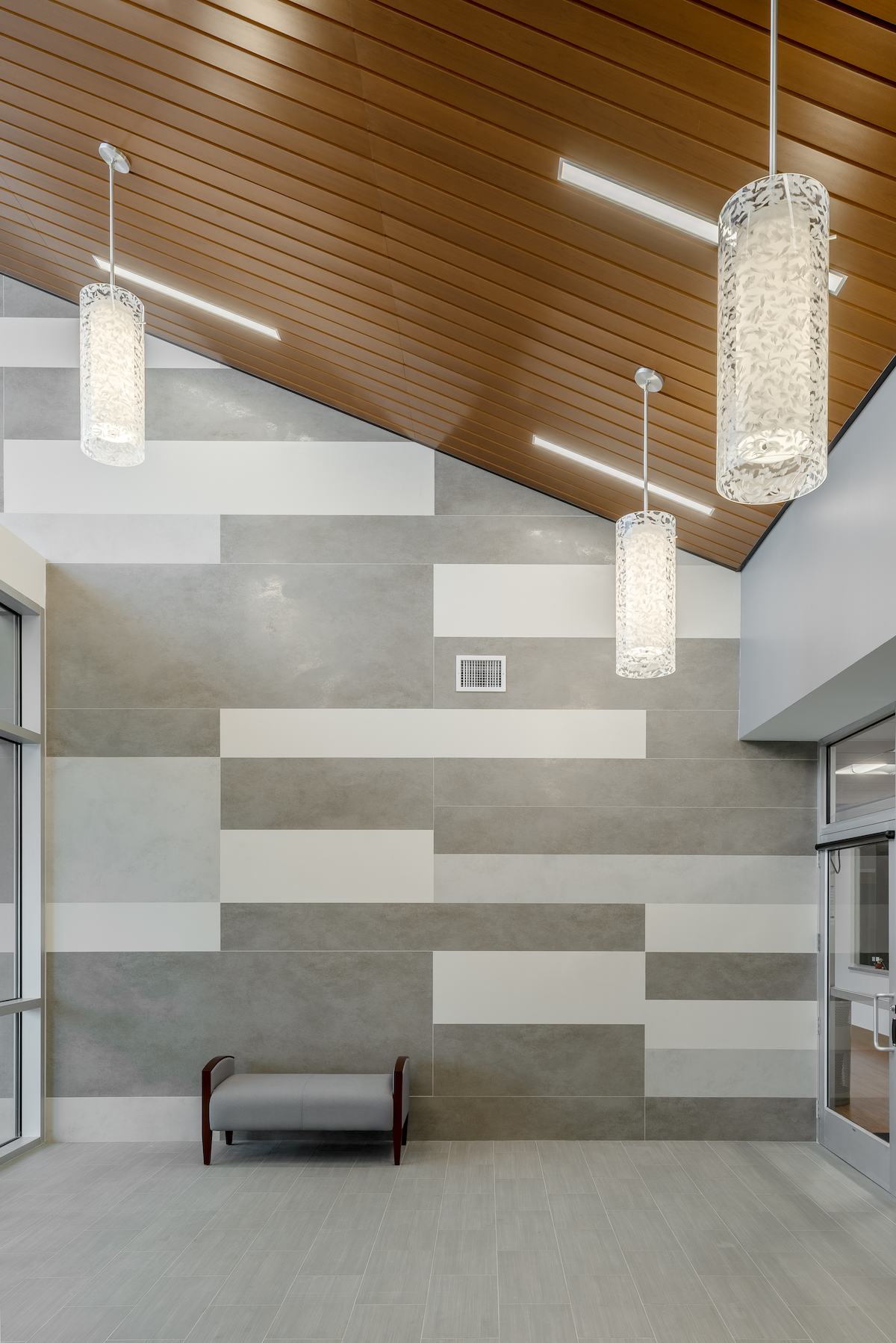
Another example is Circle Health in Tewksbury, Massachusetts, where designers needed a durable wall finish for a tall, narrow lobby with a sloped ceiling. Material weight and thickness mattered, as did the need to incorporate emergency alarms, phones, switches, and HVAC vents.
The design team selected thin porcelain tile panels from Crossville’s Oxide and Filo porcelain panel collections, combining three colors in a staggered arrangement. The installation demonstrated how panels can be cut and configured to accommodate architectural conditions and building systems while creating a welcoming space for patients.
Renovation Advantages: Thin Profiles and Tile-Over-Tile Installation
Renovations of active healthcare facilities can affect patient access, staff circulation, and daily operations, and existing building conditions may limit material choices.
Porcelain tile panels offer several practical advantages for facility renovations. Their thin profiles help minimize wall thickness in areas where space is limited. Their large dimensions also allow installers to cover expansive surfaces efficiently.
At Beth Israel Deaconess Medical Center in Boston, maintaining required corridor widths was critical during the renovation of the Farr 8 cardiovascular inpatient unit. Hallways and circulation areas had to accommodate stretchers and other medical equipment, leaving little room for additional wall thickness.
Crossville’s I Naturali porcelain panels in Travertino Avorio were the solution. The panels themselves measured just over 3 mm thick, and the complete installation, including thinset mortar, added only 8 mm to the existing walls. The design team met clearance requirements while introducing a durable, cleanable wall finish.
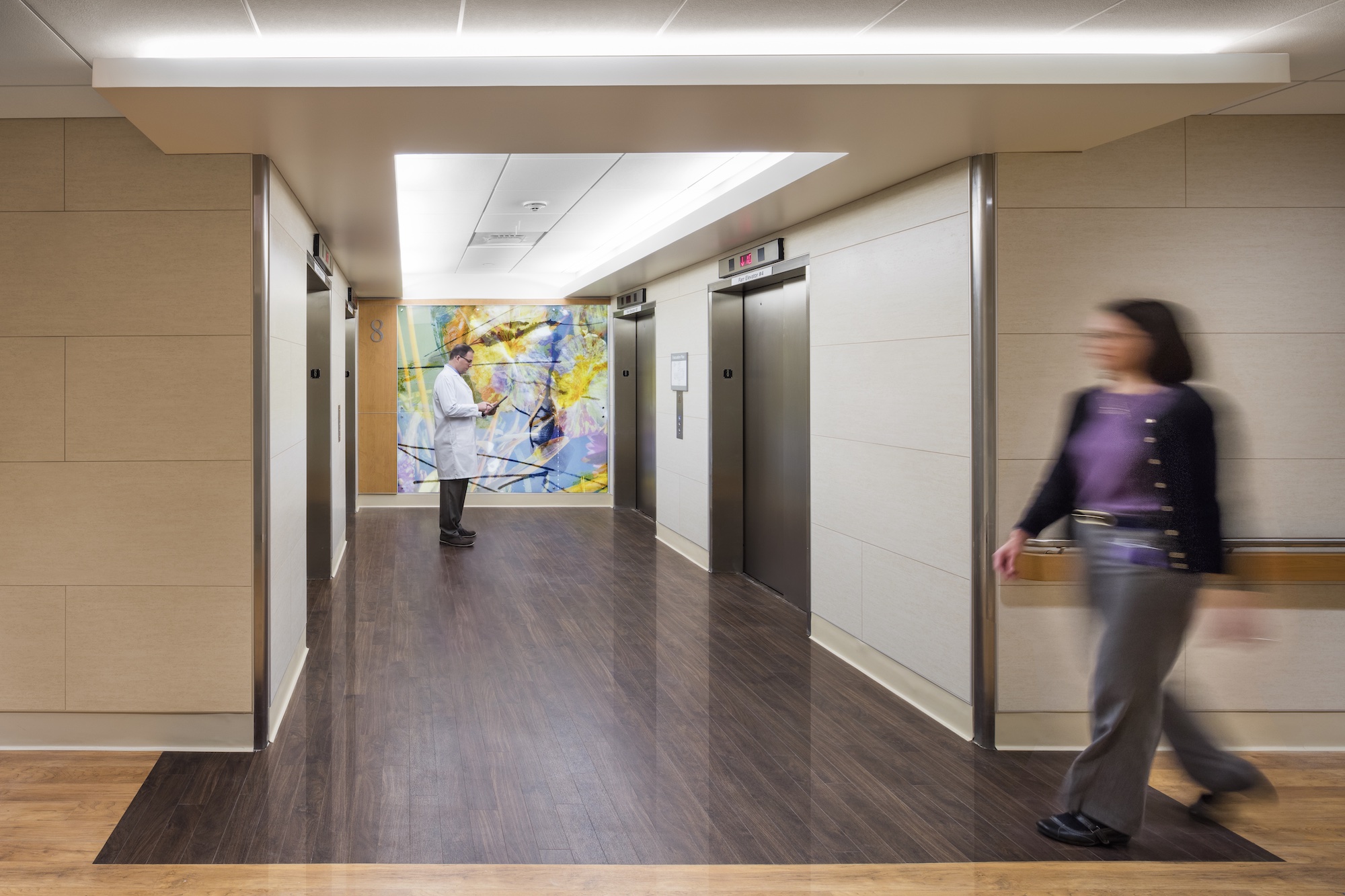 Photography by John Horner
Porcelain panels can offer another advantage in renovations through tile-over-tile installation. Their thin profile can enable tile-over-tile installation without removing the existing tile. Eliminating demolition means less construction debris, fewer disposal requirements, and less disruption to facility operations.
These benefits make porcelain panels worth considering for healthcare renovation projects where maintaining access and minimizing construction-related interruptions are priorities.
From Patient Bathrooms to Healthcare Building Exteriors
Porcelain panels offer benefits across a range of healthcare applications, including patient showers, restroom walls, and exterior facades.
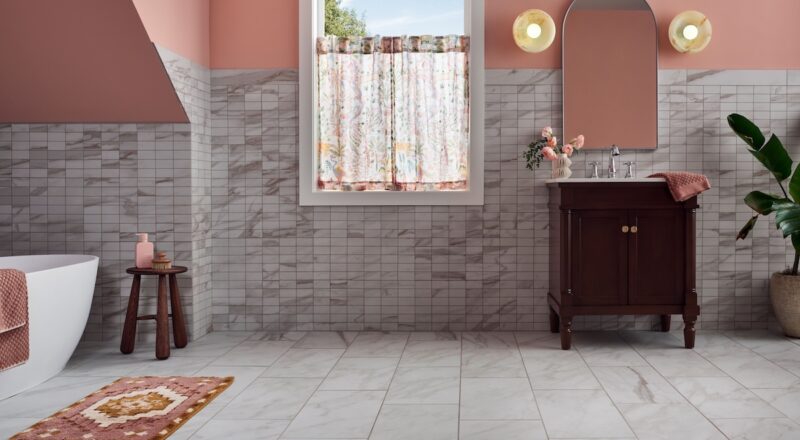
In patient bathrooms, low water absorption and ease of cleaning are especially important. Large porcelain panels let designers create sanitary, moisture-resistant shower walls that feel more residential or spa-like.
At Memorial Hermann Healthcare System’s Rockets Orthopedic Hospital in Bellaire, Texas, the design team selected Crossville’s I Naturali porcelain tile panels for the walls of 12 VIP suite restrooms. The marble-look panels provide the elegance of natural stone with the moisture resistance and easy maintenance of porcelain,
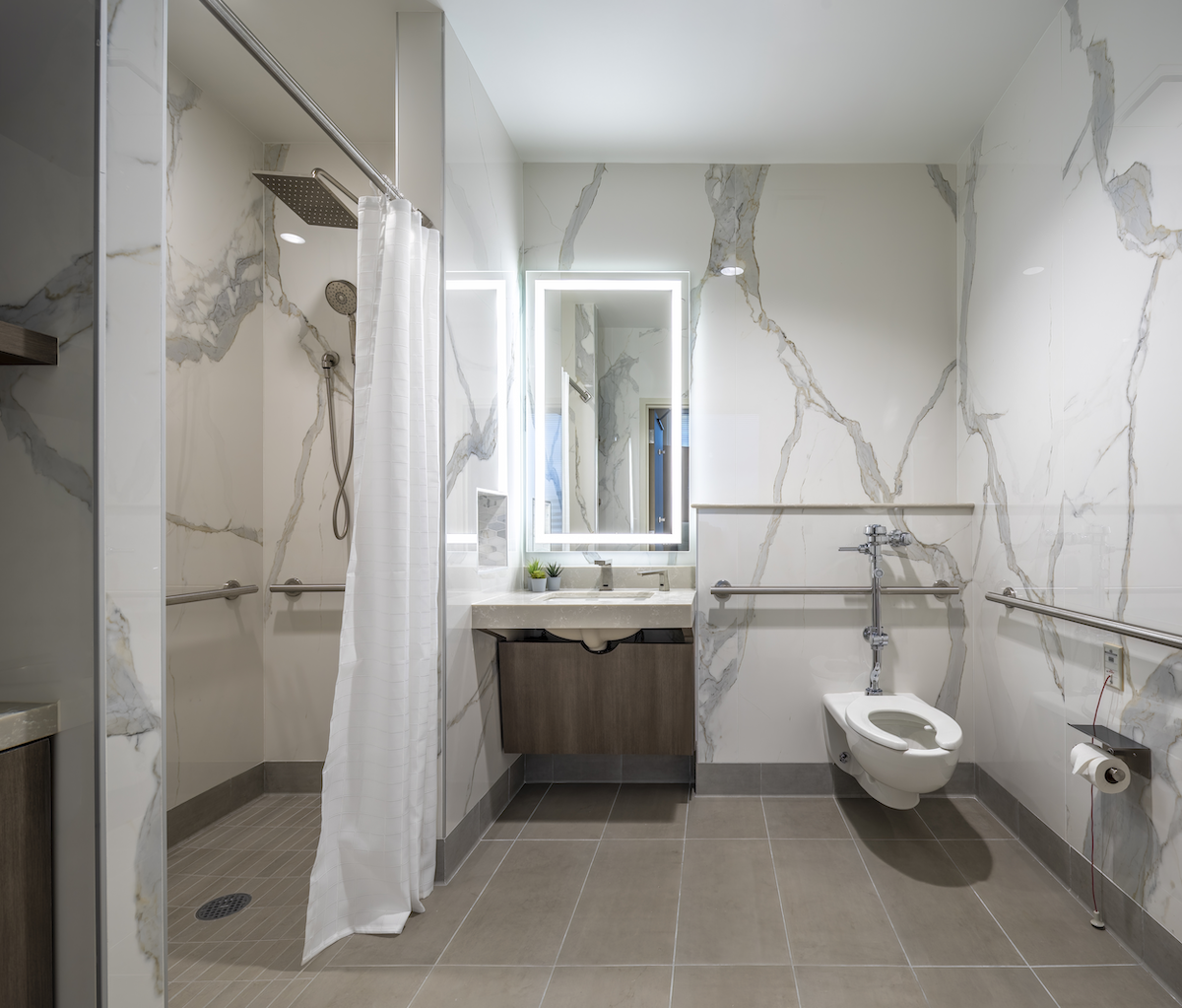 Photo by Slyworks Photography
Porcelain tile panels also present opportunities for exterior cladding. They can create attractive facades while providing a durable, non-load-bearing layer that helps protect the building from weather exposure. Their durability, weather resistance, and large dimensions make them ideal for updating aging building facades while protecting the underlying structure.
The exterior renovation of Santa Monica Medical Plaza in California illustrates this exterior cladding application. The 14-story medical office building, constructed in 1971, needed an exterior upgrade that could withstand weather exposure while giving the facility a more contemporary appearance.

Specifying Porcelain Tile Panels for Healthcare Projects
Porcelain tile panels offer a compelling combination of durability, cleanability, flexibility, and longevity, along with stunning looks and design versatility for applications ranging from hospital corridors and patient showers to medical office lobbies and building exteriors. Their thin profiles and tile-over-tile installation options also offer practical advantages when renovating existing facilities.
Explore Crossville’s healthcare surface solutions and porcelain tile panel collections to see how porcelain panels can meet the design and performance requirements of your next healthcare project.
Great Design Starts with a Sample
Order Your Free Crossville Tile Sample Today!
You can quickly and easily order a free porcelain tile panel sample through Crossville’s Sample Express. To quickly order free tile samples, just set up an account here to get started. Once you have an account, ordering a tile sample is as simple as clicking a button — and samples are always free.
Other Great Reasons to Set Up an Account
- Save your favorite products and resources
- Create and organize projects
- Review sample order history